
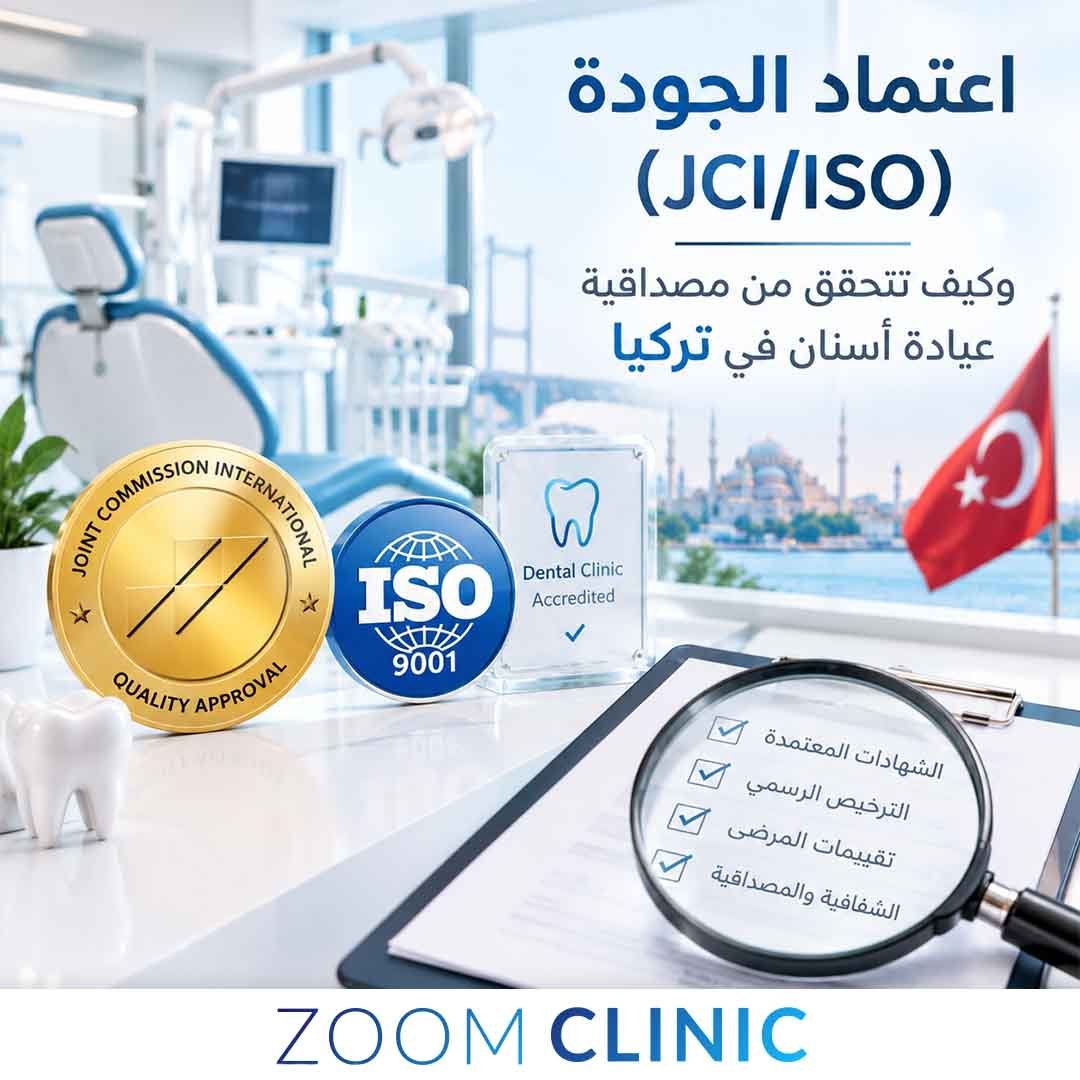
When checking a dental clinic’s accreditation and credibility in Turkey, there are three core steps to follow: confirming its license via the USHAŞ / HealthTürkiye platform under the Turkish Ministry of Health, checking for optional international quality accreditations such as JCI or ISO 9001, and reviewing independent ratings and a written treatment plan before booking.
As more Arab patients turn to medical tourism in Turkey, distinguishing between a clinic that is genuinely licensed and one relying purely on marketing claims has become critical to patient safety.
In this guide, we cover the meaning of mandatory government licensing, the leading optional international quality accreditations, and practical steps you can apply yourself before deciding to travel for treatment.
Content
What Does Quality Accreditation for a Dental Clinic Mean?
Quality accreditation is an official certification granted by a government body or an independent international organization to a clinic or hospital, confirming its compliance with specific standards for safety, quality management, and patient care.
It’s important to distinguish between two entirely different types of accreditation here. The first is mandatory government licensing, a legal requirement without which no clinic in Turkey may accept patients from outside the country. The second is optional international quality accreditations, such as JCI or ISO 9001, which a clinic pursues voluntarily to demonstrate operational excellence, but which are not a legal condition for practicing.
This distinction matters in practice: the absence of the mandatory government license is a serious warning sign that calls for immediate caution, while the absence of an optional international accreditation does not necessarily mean the clinic is untrustworthy.
Why Does This Accreditation Matter Specifically to the Patient Coming From Abroad?
An international patient travels thousands of miles without any real ability to inspect the clinic in person before booking, and often has no prior knowledge of the Turkish healthcare system or the relevant regulatory bodies.
Accreditation, the government license in particular, provides genuine institutional protection: a clinic that holds a USHAŞ license is subject to periodic inspection and is required to meet specific standards in how it deals with international patients, including a 24-hour multilingual call center. This meaningfully reduces the likelihood of ending up at a purely commercial clinic with no real oversight.
Dental Clinic’s Accreditation
The Turkish Ministry of Health License for Medical Tourism (The Most Legally Important)
USHAŞ is the Turkish state-owned company officially authorized to regulate Turkey’s medical tourism sector and oversee entities that receive international patients. It was established in 2019 under the Turkish Ministry of Health, and is the only body officially authorized for this role, launching the HealthTürkiye platform as the official interface for foreign patients.
This license is mandatory, not optional: every clinic or intermediary agency that receives patients from outside Turkey must obtain official authorization from USHAŞ and clearly display the “HealthTürkiye” certification on its premises. Under regulations that took effect in 2025, licensed entities are also required to operate a 24-hour call center in at least two languages and undergo an annual performance review by USHAŞ, with penalties reaching a six-month license suspension for serious violations.
The mandatory USHAŞ license is the legal foundation on which a dental clinic’s credibility in Turkey is built, but it alone isn’t enough to fully assess it, which is why it’s always complemented by the practical steps and international accreditations covered later in this guide.
How Do You Verify Licensing Through the Official USHAŞ Platform?
- Go to the official HealthTürkiye website run by USHAŞ, the only officially approved government platform for this purpose.
- Search for the clinic’s name in the list of approved healthcare providers shown on the platform, or ask the clinic directly to send you its official license number.
- Check that the clinic’s legal name as it appears on the platform matches the name shown on its website and at its physical location.
- Ask about the physical HealthTürkiye certificate displayed inside the clinic’s premises, as this is mandatory for every licensed entity.
- Contact the clinic directly and ask for clarification if you can’t find its name listed, since it may be newly licensed and not yet updated on the list, though this still warrants additional confirmation.
What Does It Mean If a Clinic Doesn’t Hold This License?
A clinic that receives international patients without a USHAŞ license is operating outside the legal framework the Turkish Ministry of Health specifically put in place to protect this category of patients, which is itself a fundamental warning sign.
The absence of licensing effectively means the absence of periodic oversight and institutional inspection, and the absence of any obligation to meet specific service standards like a multilingual call center or an annual performance review. It also means the patient loses access to the official complaint channel available through the relevant government body should any issue arise during their treatment journey.
The Leading International Quality Accreditations and What They Actually Mean
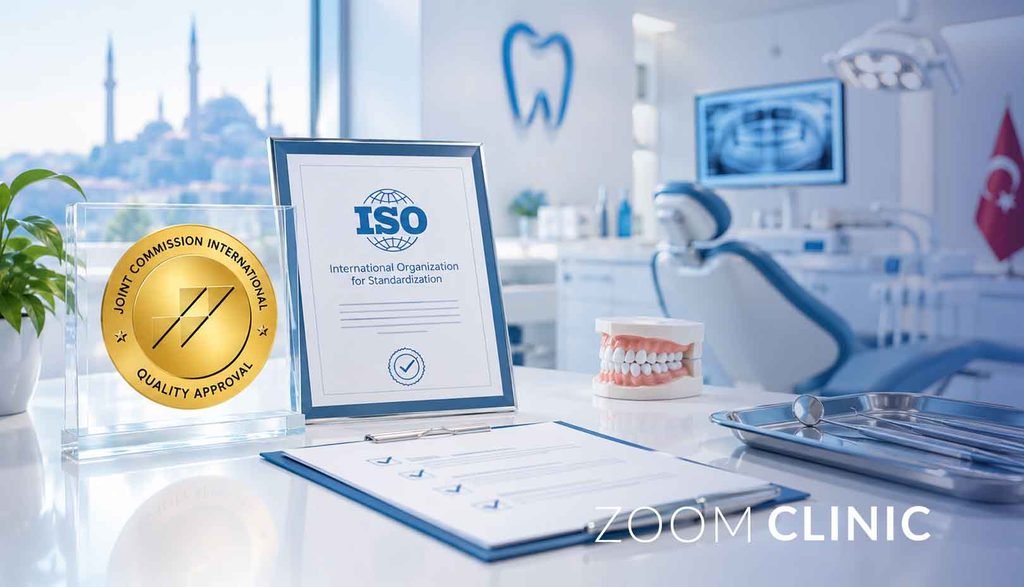
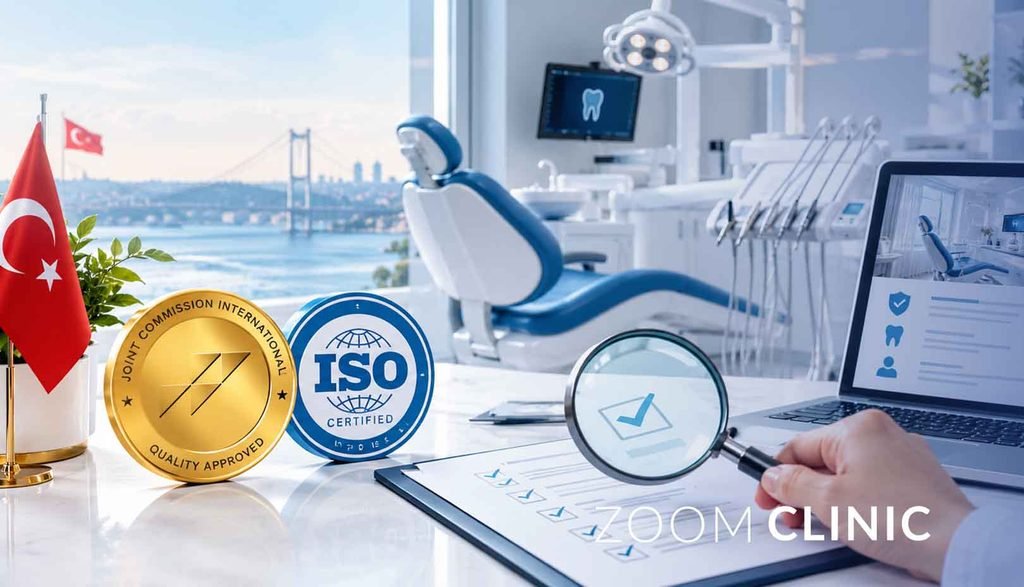
Once government licensing is confirmed, international quality accreditations serve as an additional optional layer reflecting a clinic’s commitment to operational standards above the legal minimum. Four accreditations stand out, summarized below:
| Accreditation | Issuing Body | Mandatory? | What It Guarantees the Patient |
| JCI | Joint Commission International (US-based international body) | No, optional | On-site-audited safety and care-quality standards |
| ISO 9001 | Accredited international auditing bodies | No, optional | A documented quality management and internal process system |
| TEMOS | Temos International (independent, neutral organization) | No, optional | Unified clinical, ethical, and service standards for medical tourism |
| TDB | Turkish Dental Association | Yes, mandatory for every practicing dentist | Confirmation of accredited education and legal authorization to practice |
JCI Accreditation (Joint Commission International)
JCI is the international arm of the American nonprofit Joint Commission, and is considered one of the most prestigious healthcare quality accreditation bodies worldwide. It awards the “Gold Seal” to healthcare organizations after they pass a rigorous on-site survey assessing their compliance with safety and care-quality standards.
To verify a specific clinic’s accreditation, you can visit the official search page for internationally accredited organizations on the Joint Commission International website and search by the clinic’s name or country. If the clinic doesn’t appear on the list, this simply means it doesn’t hold JCI accreditation, which is common even among good clinics, since the cost and process for this accreditation are relatively high and better suited to larger institutions than individual clinics.
ISO 9001 Quality Management Certification
ISO 9001 is a general international quality management standard, not specific to the healthcare sector, but widely applied in dental clinics to demonstrate a documented system for controlling quality and internal processes.
This certification is issued by accredited external auditing bodies and requires periodic reviews to maintain. Its significance is that it indicates an organizational structure and documented procedures, but it doesn’t specifically measure clinical outcomes themselves, so it’s best viewed as an additional indicator rather than a single decisive standard.
TEMOS International Accreditation for Medical Tourism
TEMOS is an independent, neutral accreditation organization specializing specifically in evaluating hospitals, clinics, and medical tourism centers against unified clinical, ethical, and service standards, and its programs include accreditation specifically for dental clinics.
You can verify any facility’s accreditation through TEMOS’s official directory available on its website, which is updated periodically to reflect facilities that actually hold accreditation worldwide. It’s always advisable to check the certificate’s validity date, since TEMOS accreditations are granted for a specific period and are subject to renewal.
Doctor Registration With the Turkish Dental Association (TDB)
Türk Dişhekimleri Birliği is the official professional body that oversees the registration and licensing of every dentist practicing in Turkey, and ensures that a certificate holder has received accredited education and is legally authorized to practice dentistry.
The association offers a dentist-search service on its official website, where you can confirm a doctor’s registration number and clinic location. If a clinic refuses to provide the name and registration number of the specific doctor who will perform your procedure, this is a clear warning sign that warrants pausing and asking further questions before proceeding.
Dental Clinic’s Accreditation
Practical Steps to Verify a Clinic’s Credibility Before Booking
Beyond confirming licensing and accreditations, there are additional practical steps any patient can apply themselves easily before confirming a booking.
Checking Independent Reviews (Google Maps, Trustpilot)
Look for the clinic’s reviews on independent platforms such as Google Maps or Trustpilot, apart from the testimonials displayed on the clinic’s own website, which may be carefully curated.
Pay attention to the number of reviews and how varied their dates are, since a large number of similarly-worded reviews posted within a very short timeframe may indicate non-organic reviews. Also read the negative reviews specifically, and see how the clinic’s management responded to them, as this reveals a lot about its actual professionalism.
Requesting a Written Treatment Plan That Includes the Brand Names Used
Ask the clinic for a detailed written treatment plan before traveling, one that precisely names the procedure, the expected number of sessions, and the specific materials or brands to be used, such as the implant brand or veneer type. A comparison of accredited dental implant brands can help you understand the differences between common brands before asking your doctor the right questions.
Trustworthy clinics don’t hesitate to provide these details in writing, and in fact consider this a core part of being transparent with the patient. A lack of this clarity, or settling for general promises without specific technical details, is a sign that warrants asking further questions.
Asking About the Treatment Warranty
Ask clearly about the written warranty offered on the procedure, its duration, and exactly what it covers should a problem arise after you return home. This matters especially for relatively complex procedures such as All-on-4 dental implants in Turkey, where the warranty typically extends for several years given the long service life of the prosthetic bridge.
Serious clinics provide a formal, documented warranty and explain how remote follow-up works should you need a later consultation. Also make sure to find out whether the warranty is issued by the clinic alone or by the manufacturer of the materials used as well, as this provides an additional layer of protection.
Warning Signs of an Untrustworthy Clinic
These are the signs that actually threaten a dental clinic’s credibility in Turkey, regardless of how large its marketing campaigns are:
- No reference to a USHAŞ license, or refusal to provide the license number when asked directly.
- Unclear pricing, or the quoted cost changing repeatedly without a convincing explanation; you can check realistic price ranges through sources such as the cost of veneers in Turkey 2026 guide to compare against any offer that seems off.
- Clear pressure for immediate booking, or repeated, suspicious “very limited time” offers.
- Absence of independent reviews on external platforms, or reviews with strikingly similar wording.
- Refusal to provide the name of the actual treating doctor or their Turkish Dental Association registration number.
- No written treatment plan, or reliance on general verbal promises without technical details.
How Do You Feel Confident About the Medical Team Responsible for Your Case?
The medical reviewer named in this article, Dr. Mubessir Rajjob, is a general dentist with experience in cosmetic and restorative dentistry, officially registered to practice in Turkey under the Turkish Dental Association’s regulations. Having a named medical reviewer, with a clear profile page on the clinic’s website, is one of the simplest transparency indicators worth looking for.
You can view the full medical team at Zoom Clinic to review each doctor’s qualifications before making your decision.
Questions to Ask Your Dentist Before Approving the Treatment Plan
Ask the doctor directly about how many similar cases to yours they’ve treated before, and about the specific brand of implant or material they’ll use and why they chose it specifically for your case. Also ask about realistic potential risks and complications, not just the positive aspects, as this is a sign of professional and honest engagement with your case.
Dental Clinic’s Accreditation
Quick Comparison: Mandatory Government Licensing vs. Optional International Accreditation
| Criterion | Government License (USHAŞ) | International Accreditation (JCI / ISO / TEMOS) |
| Issuing body | Turkish Ministry of Health via USHAŞ | Independent, non-governmental international organizations |
| Mandatory? | Mandatory for accepting international patients | Entirely optional |
| What it guarantees the patient | Periodic government oversight, an official complaint channel | Operational and clinical standards above the legal minimum |
| Its absence means | A clear legal violation | Doesn’t necessarily mean a lack of quality |
This table shows why it’s always best to check both: the government license as a non-negotiable baseline requirement, and international accreditation as an additional indicator that strengthens trust.
Frequently Asked Questions
Do trustworthy clinics provide a written warranty on dental implants?
Yes, serious clinics typically provide a documented written warranty that specifies its duration and exactly what it covers. It’s best to ask whether the warranty is issued by the clinic alone or by the implant manufacturer as well, since that provides broader protection for the patient after returning home.
Where can I find trustworthy, unbiased reviews of dental clinics in Turkey?
Look for the clinic’s reviews on independent platforms such as Google Maps or Trustpilot, rather than relying solely on the testimonials shown on the clinic’s own website. Pay attention to how varied the review dates and writing styles are, and read the negative reviews specifically to gauge how professionally the clinic handles them.
What questions should I ask during the first consultation to confirm a clinic’s credibility?
Ask about the USHAŞ license number, the treating doctor’s name and their Turkish Dental Association registration number, and the specific brand of materials used. Also ask about the written treatment plan, the warranty offered, and the realistic potential risks specific to your case, not just the positive aspects of the procedure.
Is ISO 9001 certification alone enough to judge a clinic’s quality?
No, ISO 9001 is a general quality management standard not specific to healthcare, and it indicates a documented organizational system, but doesn’t measure clinical outcomes themselves. It’s best treated as an additional indicator to be read alongside government licensing, doctor registration, and independent patient reviews, not as a substitute for them.
What’s the difference between the Turkish Ministry of Health license and JCI accreditation?
The Turkish Ministry of Health license via USHAŞ is legally mandatory for every clinic that receives international patients, and is issued by a Turkish government body. JCI accreditation, on the other hand, is an optional international certification granted by a non-governmental organization, reflecting an additional commitment to global quality standards, but its absence doesn’t constitute a legal violation the way the absence of a USHAŞ license does.
Can a clinic without JCI accreditation still be safe?
Yes, JCI accreditation is optional and relatively costly, and most individual clinics, even good ones, don’t hold it. The more important standard is the mandatory USHAŞ license, alongside the doctor’s registration with the Turkish Dental Association and the availability of trustworthy independent reviews reflecting real patient experiences.
How do I confirm that the treating dentist is officially registered in Turkey?
You can use the dentist-search service on the official website of the Turkish Dental Association (TDB) by entering their name to verify their registration number. You can also ask the clinic directly for the doctor’s registration number, as trustworthy clinics never hesitate to provide this information.
What is the USHAŞ platform and how do I use it to verify licensing?
USHAŞ is the Turkish state-owned company officially authorized to regulate the medical tourism sector, and it runs the official “HealthTürkiye” platform. You can visit the platform’s official website and search for the clinic’s name in the list of approved providers, or request the license number directly from the clinic to verify it.
Conclusion
Verifying a dental clinic’s credibility in Turkey rests on three interconnected pillars: first confirming the mandatory government license via USHAŞ, then considering optional international accreditations like JCI, ISO 9001, or TEMOS as an additional quality indicator, and finally applying simple practical steps such as checking independent reviews and requesting a written treatment plan and a clear warranty.
None of these pillars replaces the others; combining official licensing with independent reviews is what gives you a realistic, complete picture before making your decision. If you’re considering dental treatment in Turkey, you can explore Zoom Clinic’s cosmetic dentistry services and learn about Zoom Clinic’s experience in healthcare, its accreditations, and its doctors’ qualifications, then book your free consultation now.
Get the special offer today from Zoom Clinic