
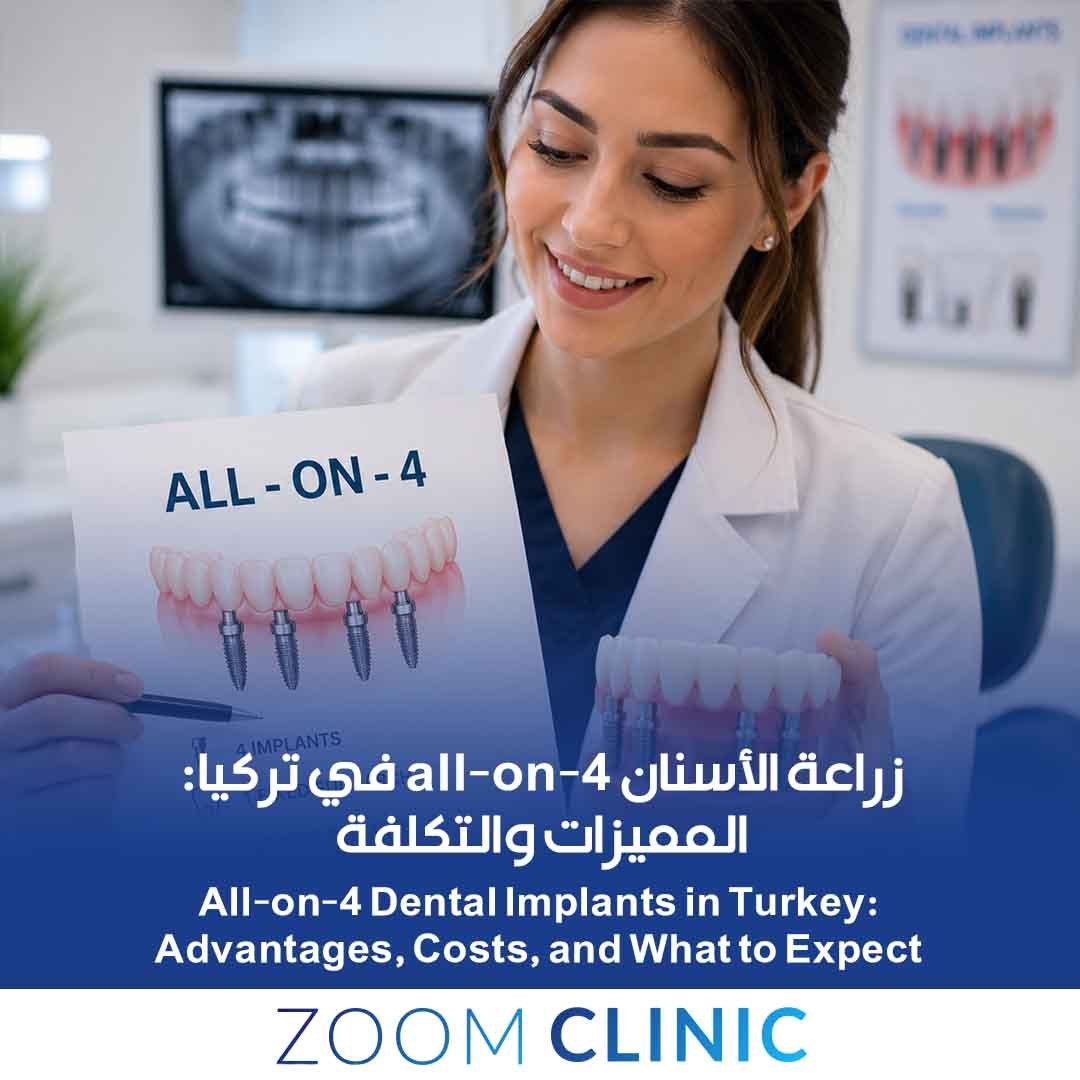
Losing most or all teeth is not merely a cosmetic concern, it affects speech, nutrition, and self-confidence on a daily basis. For many years, removable dentures were the only available solution, often causing ongoing discomfort and gradually losing their effectiveness over time.
The All-on-4 dental implant technique has completely changed this equation: fixed, long-lasting teeth that can be placed in a single day. As demand for All-on-4 dental implants in Turkey continues to grow among international patients, it has become essential to understand this treatment in depth, its genuine advantages, the limitations that are rarely discussed, and the actual costs you can expect in 2026.
Content
What Is the All-on-4 Dental Implant Technique?
How Does the Technique Work?
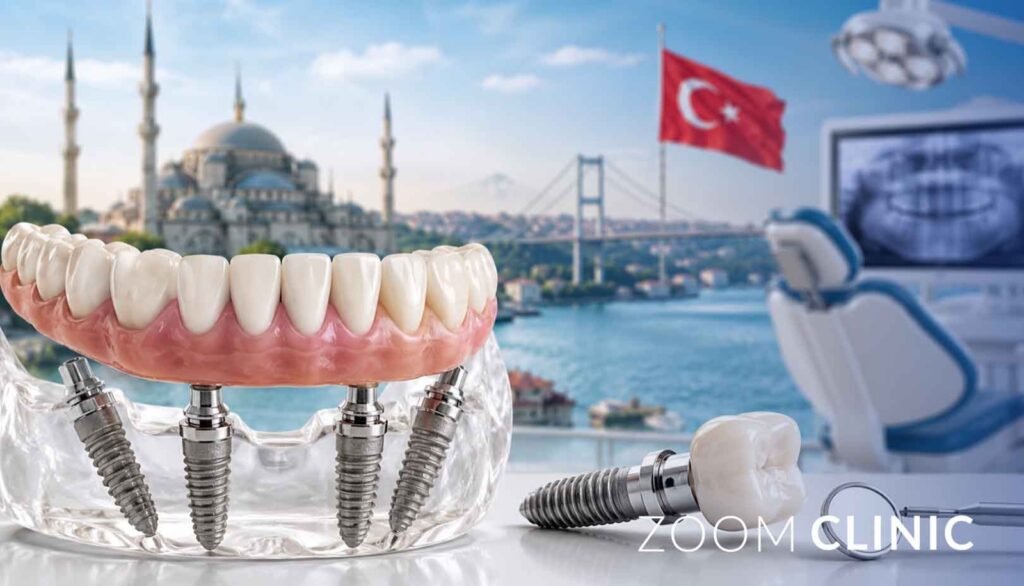
The All-on-4 technique relies on placing only four titanium implants to support a full-arch prosthesis for one jaw. The two front implants are inserted vertically, while the two posterior implants are placed at a 30–35-degree angle, this is the key concept behind the entire procedure.
This posterior angulation allows clinicians to utilize areas of higher bone density while avoiding anatomical limitations such as the maxillary sinuses in the upper jaw and the inferior alveolar nerve in the lower jaw. As a result, implant placement becomes possible even in cases of reduced bone volume that would traditionally require additional and costly surgical interventions.
All-on-4 Dental Implant
Are You an Ideal Candidate for All-on-4?
The technique is particularly suitable for individuals who:
- Have lost most or all teeth in one or both jaws
- Have reduced bone density in the posterior regions, making conventional implant placement more difficult
- Wish to avoid sinus lift procedures or extensive bone grafting surgeries
- Are seeking a permanent alternative to removable dentures
On the other hand, All-on-4 may be less suitable for patients with heavy smoking habits, uncontrolled diabetes, or severe teeth grinding (bruxism). In such cases, many clinicians recommend All-on-6 as a more stable alternative that provides additional support.
Advantages of All-on-4 Dental Implants
Fixed Teeth in One Day
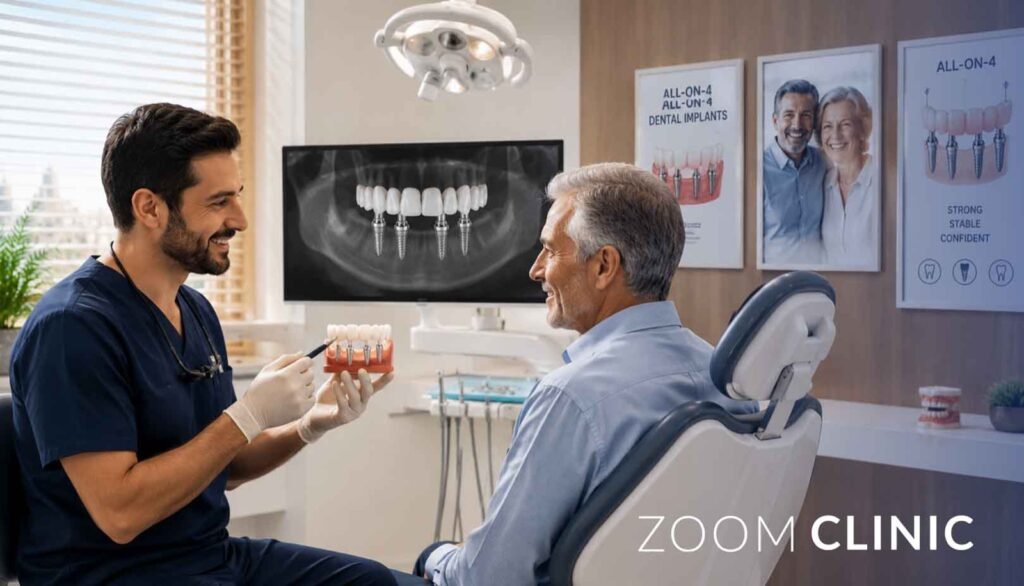
One of the most significant benefits of the technique is what is known as Immediate Loading. A fixed temporary bridge is attached on the same day as the surgery. Patients can enter the clinic with damaged teeth, or no teeth at all, and leave with a fully functional smile on the very same day.
This dramatically shortens the treatment journey compared with traditional approaches, which may require six to twelve months before final teeth can be placed.
Genuine Cost Savings
Replacing an entire arch with individual implants may require 10–14 implants or more, involving higher costs, additional surgeries, and multiple appointments. All-on-4 simplifies the process by using only four implants, significantly reducing the overall treatment expense.
Furthermore, in many cases, it eliminates the need for costly bone grafting procedures. More details can be found in the article
The Role of Bone Grafting in Dental Implant Treatment on the Zoom Clinic website.
All-on-4 Dental Implant
Preserving Jawbone and Facial Structure
Following tooth loss, the jawbone gradually deteriorates due to the absence of mechanical stimulation. Titanium implants restore this stimulation, slowing bone resorption and helping maintain bone density.
The benefits extend beyond function; bone loss is the primary reason behind the “sunken face” appearance commonly observed in long-term denture wearers.
Scientifically Documented Success Rates
Studies indicate that implant survival rates for the All-on-4 technique range between 94% and 98% after 10 years, while prosthetic bridge survival rates range from 85% to 90% over the same period. These figures are based on long-term evidence compiled by the International Team for Implantology (ITI).
In addition, a study published in the Journal of Oral Rehabilitation involving 471 patients reported a 95% survival rate after 10 years and a 92% survival rate after 18 years, among the longest documented follow-up periods in the field.
Limitations and Disadvantages of All-on-4 (An Honest and Objective Perspective)
The Bridge Is a Single, Non-Modular Unit
With individual dental implants, each implant or crown can be treated independently without affecting the others. In All-on-4, however, the bridge functions as a single integrated unit. Any fracture or technical complication can impact the entire arch and may require comprehensive repair.
This does not mean complications are common, but it is an important consideration when comparing treatment options.
Risk of Implant Failure
Clinical studies report implant failure rates ranging from 2% to 4% for All-on-4 treatments. Although relatively low, the nature of the system means that the failure of a single implant can affect the stability of the entire restoration.
Factors that increase this risk include smoking, diabetes, and poor oral hygiene. The American Dental Association (ADA) has emphasized that quitting smoking 2–4 weeks before and after surgery can significantly improve bone healing.
Dietary Restrictions During the Healing Phase
During the first three months, patients are generally advised to follow a soft-food and liquid-based diet until osseointegration, the biological bonding between the implants and the jawbone, is complete. Guidance regarding the recovery phase can be found in the article Dental Implant Success Rates on the Zoom Clinic website.
Acrylic vs. Zirconia: An Important Decision Before Treatment
| Criteria | Acrylic Bridge | Zirconia Bridge |
| Cost | Lower | Higher |
| Durability | Moderate | Very High |
| Expected Lifespan | 5–10 Years | 15–20+ Years |
| Aesthetics | Good | Highly Natural |
| Fracture Risk | Higher | Lower |
Acrylic bridges are often used as temporary restorations during the healing phase, whereas zirconia is generally considered the ideal long-term option for the final prosthesis.
Cost of All-on-4 Dental Implants in Turkey in 2026
Price Range in Turkey
| Treatment Scope | Approximate Cost |
| One Jaw (Acrylic) | $2,500 – $4,000 |
| One Jaw (Zirconia) | $4,000 – $5,500 |
| Both Jaws (Acrylic) | $5,000 – $7,500 |
| Both Jaws (Zirconia) | $7,500 – $11,000 |
These prices vary depending on factors such as the implant brand used (Straumann, Nobel Biocare, Osstem), whether tooth extractions are required, and the need for any additional preparatory procedures.
Cost Comparison with Other Countries
| Country | Approximate Cost for Both Jaws |
| Turkey | $5,000 – $11,000 |
| Egypt | $6,000 – $10,000 |
| Saudi Arabia | $12,000 – $20,000 |
| United Kingdom | $18,000 – $28,000 |
| Germany | $20,000 – $30,000 |
Turkey offers a technical standard comparable to many European countries, using the same internationally recognized implant brands and treatment protocols, while often costing up to 70% less.
What Is Usually Included in the Treatment Package?
Most full-mouth dental implant packages in Turkey typically include:
- Initial consultation and 3D CBCT imaging
- Extraction of remaining teeth (if necessary)
- Four implants and a temporary bridge on the first day
- Final bridge placement after 3–6 months
- Remote follow-up between visits
Some clinics also include accommodation and transportation services as part of their medical tourism packages, further enhancing Turkey’s appeal as a treatment destination for international patients.
All-on-4 Dental Implant
The All-on-4 Dental Implant in Turkey: From Consultation to Your New Smile
Before Surgery
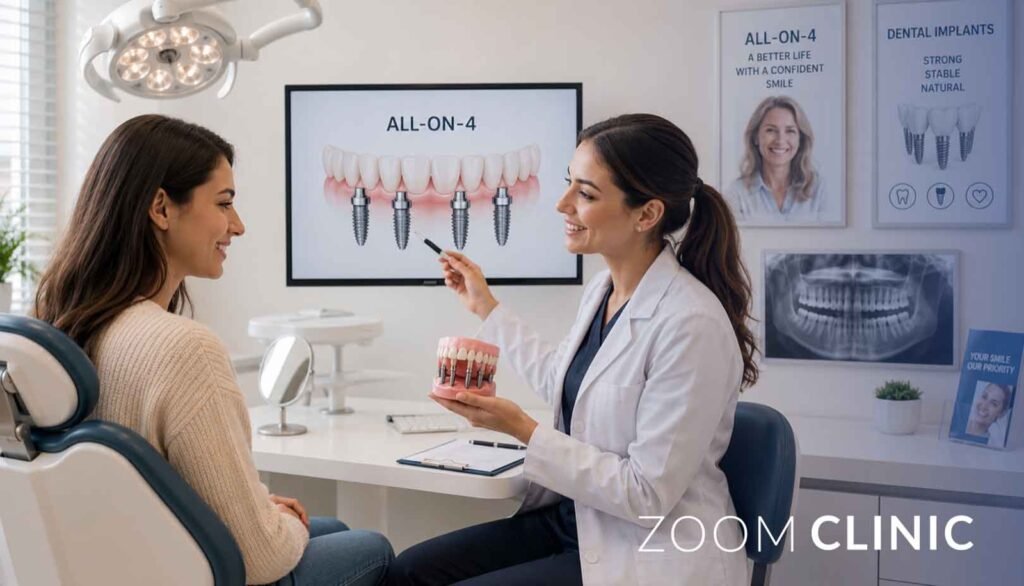
The process often begins before travel. Patients send panoramic X-rays or oral photographs to the clinic via email for an initial free evaluation. Upon arrival in Turkey, a CBCT scan is performed to create a detailed three-dimensional map of bone density, nerve locations, and optimal implant placement angles.
This precise digital planning is a major reason for the high success rates associated with the procedure and helps reduce surgical time significantly.
On the Day of Surgery
The procedure is performed under either local or general anesthesia, depending on the patient’s preference. It typically includes the extraction of non-restorable teeth, placement of the four implants according to the digital plan, and immediate attachment of the temporary bridge.
Patients leave the clinic with fixed, functional teeth on the same day. The average surgical time ranges from 3–5 hours for both jaws.
Recovery and Aftercare
During the first six weeks, only soft and liquid foods are recommended to protect the bridge and support bone healing. Thereafter, patients gradually return to a normal diet under the guidance of their dentist.
Regular virtual follow-up appointments are conducted with the treating clinician while the patient remains in their home country. A second visit to Turkey is scheduled after 3–6 months for placement of the final bridge and completion of the final assessments. More details about the healing process can be found in the article Immediate Dental Implants to better understand the differences between individual cases.
Why Choose Zoom Clinic for All-on-4 Treatment in Turkey?
Zoom Clinic provides advanced dental implant solutions for complex cases using modern technologies and internationally standardized treatment protocols. The clinic’s approach includes:
- Three-dimensional treatment planning using CBCT technology for precise implant placement
- Implants from leading globally recognized brands approved by international regulatory authorities
- A specialized team experienced in full-mouth rehabilitation
- Remote post-treatment follow-up to ensure smooth healing after returning home
To learn whether All-on-4 is the right option for your case, contact the Zoom Clinic team for a free initial consultation.
Get the special offer today from Zoom Clinic
Frequently Asked Questions
Are All-on-4 Dental Implants Permanent?
Titanium implants are designed to last a lifetime when properly maintained, with studies demonstrating survival rates exceeding 94% after 10 years. The prosthetic bridge, however, may require repair or replacement after 10–15 years, particularly if it is made of acrylic.
How Long Do I Need to Stay in Turkey for All-on-4 Treatment?
Most patients require two visits. The first visit lasts approximately 5–7 days for surgery and placement of the temporary bridge. The second visit takes place 3–6 months later for replacement with the final bridge. The temporary restoration allows patients to maintain functional teeth throughout the healing period.
Is the All-on-4 Procedure Painful?
The procedure is performed under local or general anesthesia, meaning patients do not experience pain during surgery. Mild discomfort and swelling may occur after the anesthesia wears off, but these symptoms are typically managed with pain medication for 3–5 days. Three-dimensional digital planning has significantly reduced both surgical time and postoperative discomfort.
Can Both Jaws Be Treated in the Same Session?
Yes. In many cases, both the upper and lower jaws can be treated during a single appointment, reducing the number of trips and anesthesia sessions required. The dentist evaluates the patient’s overall health and bone condition to determine whether this approach is appropriate, as some clinicians may prefer to begin with a single jaw.
What Is the Difference Between All-on-4 and All-on-6?
All-on-4 utilizes four implants, with the posterior implants angled to avoid areas of reduced bone availability. It is generally more affordable and widely used. All-on-6 incorporates two additional implants to distribute biting forces more evenly and is often recommended for patients with severe bite pressure or those seeking enhanced support.
Scientific References
Malo P. et al. , “All-on-4 Immediate-Function Concept” , Journal of Oral Rehabilitation (Study involving 471 patients with follow-up extending up to 18 years)
International Team for Implantology (ITI) , Guidelines for Full-Arch Dental Implant Rehabilitation and Clinical Practice Standards: iti.org
American Dental Association (ADA) , Recommendations Before and After Dental Implant Surgery: ada.org
Turkish Dental Association (TDB) , Standards for Accreditation of Turkish Clinics in Regenerative Dentistry: tdb.org.tr
Estimated Word Count: ~2,050 words , within the target range (1,800–2,200 words)