

Your braces journey is finally over, and your teeth are now straight and aligned just as you always dreamed. But when you look in the mirror, you may notice that the color of your teeth doesn’t quite match their newfound straightness, or perhaps white spots have appeared that weren’t there before. This is where the question arises: is it time for teeth whitening after braces? The answer isn’t as simple as it seems, and making the decision to whiten at the wrong time could cost you more than you expect.
Teeth whitening after braces is a step many people desire to complete the transformation of their smile, but it requires a precise understanding of what your teeth went through during the years of orthodontic treatment, and what happens to the enamel layer the moment the brackets are removed. In this guide, you’ll find clear, medically grounded answers that help you make the right decision at the right time.
content
Why Does the Shade of Your Teeth Change After Braces?
Do Metal Braces and Clear Aligners Differ in This Regard?
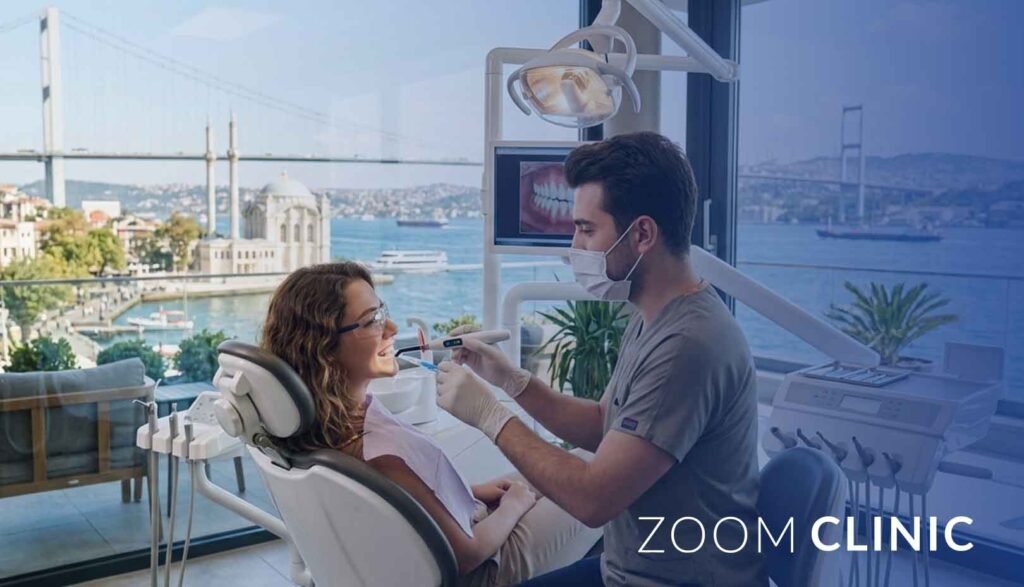
Teeth whitening after braces
Before discussing whitening, it’s essential to understand what happens to your teeth throughout the time you wear braces. With traditional metal braces, the brackets bonded to the tooth surface with adhesive cover portions of the enamel for months or even years. These covered areas remain isolated from saliva, which plays a natural role in remineralizing and protecting the teeth. When the brackets are removed, noticeable differences in shade may appear between the covered areas and those that were exposed.
Clear aligners, on the other hand, present a somewhat different situation. Since they leave the entire tooth surface exposed throughout the treatment period, color assessment after removal is clearer and easier, and may sometimes shorten the recommended waiting period before whitening. However, this does not mean clear aligners have no effect on the enamel, the continuous pressure on the teeth and the changing oral environment remain influential factors in both cases.
White Spots, What Are They and Do They Disappear on Their Own?
The white spots that appear around bracket sites after braces are removed are not simply a passing cosmetic concern. They are a sign of enamel mineral loss, scientifically known as demineralization. This occurs when bacteria and acid accumulate in areas that are difficult for a toothbrush to reach during orthodontic treatment, weakening the enamel layer and producing these characteristic spots.
The bad news is that these spots do not disappear on their own in most cases. Even worse, traditional whitening will not remove them, it may actually make them more visible and pronounced, because it whitens the surrounding enamel without addressing the different nature of the spots themselves. For this reason, treating white spots must come before any whitening decision, and is not a step that can be ignored or postponed.
The Role of Saliva and the Oral Environment in Restoring Enamel Balance
Saliva is not merely a fluid in the mouth, it is a natural defense system that works continuously to regulate oral acidity and restore minerals to the enamel layer. Throughout the braces period, the oral environment is affected, and with it the amount of saliva available to reach all parts of the teeth. The moment the braces are removed, saliva begins to resume its full role, a process that takes time before it can restore some of the enamel’s density and strength. This is the primary reason why whitening cannot begin immediately after removal.
When Can You Start Teeth Whitening After Braces?
The Minimum Waiting Period and What Happens to Your Enamel Right After Removal
The recommended minimum waiting period in dental medicine ranges from two to six weeks after braces removal, and this wide variation confuses many people. The real reason behind it is that this timing is not a fixed number, it depends specifically on the condition of your enamel. Immediately after removal, the enamel is in a state of elevated porosity and heightened sensitivity. Whitening agents containing hydrogen peroxide or carbamide peroxide penetrate this weakened enamel more deeply than usual, significantly increasing the likelihood of severe pain and irritation.
The medically recommended absolute minimum is two weeks, but four to six weeks remains the safest and most reliable timeframe for achieving even, comfortable whitening results.
The Factors That Determine Your Personal Ideal Timing
There is no single universal timing that suits everyone, because the decision is shaped by several personal variables:
Duration of braces treatment: The longer the treatment period, the more time your teeth need to restore their natural mineral balance.
Presence of white spots: If white spots appear clearly after removal, this is an explicit signal that they must be treated first before any whitening, and this phase may extend from several weeks to several months.
Current sensitivity level: If you feel sensitivity in your teeth after removal when consuming cold or hot drinks, this is a clear sign that the enamel has not yet fully recovered.
Your treating dentist’s opinion: The dentist who supervised your orthodontic treatment is best positioned to directly assess the condition of your teeth and enamel and determine the most appropriate timing for you.
A Practical Roadmap: From the Day of Removal to Your First Whitening Session
Week one: Professional cleaning at the clinic to remove accumulated deposits, and begin using a fluoride-rich toothpaste to strengthen the enamel.
Weeks two to four: Medical evaluation for the presence and severity of white spots. If no spots exist and sensitivity is low, consult your dentist about the possibility of beginning whitening.
Weeks four to six: The optimal time to begin whitening for most patients who do not experience sensitivity or visible white spots.
In the case of white spots: A remineralization program or ICON treatment is applied first, followed by a reassessment of color before any whitening session. This phase may extend from six weeks to three months.
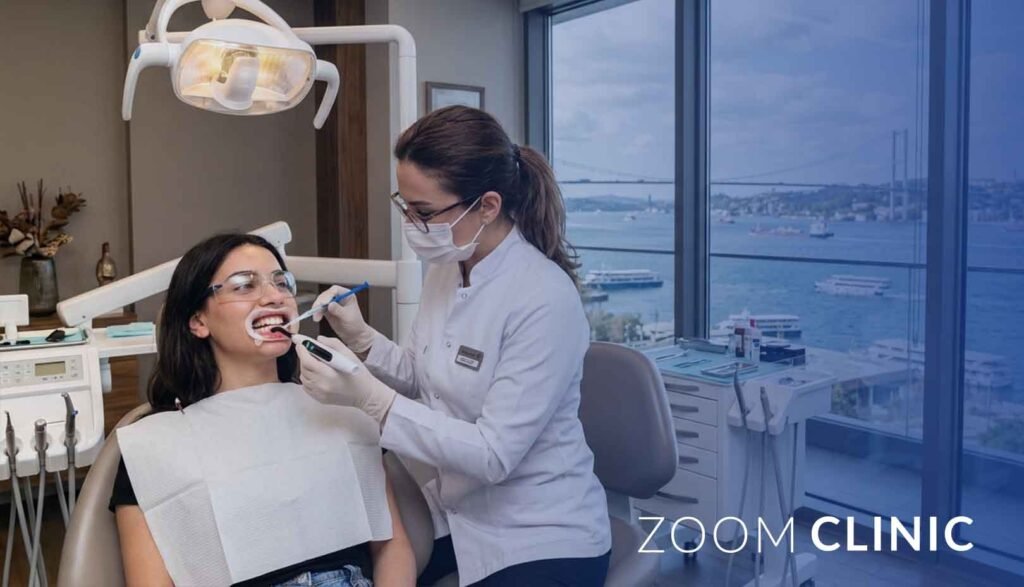
Teeth whitening after braces
Risks of Teeth Whitening After Braces Too Early
Worsening Tooth Sensitivity and Enamel Weakening
Rushing into whitening before the enamel has restored its density is somewhat like applying a chemical substance to a wound that hasn’t healed yet. Whitening agents work by penetrating the enamel layer to reach the colored molecules in the dentin, and when the enamel is abnormally weak and porous, this penetration becomes deeper and less controlled, causing sharp pain and persistent sensitivity that can last for days or weeks after the session.
In more serious cases, premature whitening may cause additional thinning of the enamel layer, which is a permanent protection for your teeth and cannot be naturally replaced once lost.
Uneven Results and an Irregular Color
Even if you tolerate the pain, early whitening risks unpredictable results. The areas that were covered by brackets respond differently to whitening agents compared to those that were exposed. The likely outcome is an uneven color, where some areas of the teeth appear lighter or darker than adjacent areas, a result entirely contrary to what you were aiming for.
Gum Irritation and Its Effect on Whitening Results
The gums after braces are also in a phase of recovery and rebalancing. Throughout the years of orthodontic treatment, mild inflammation accumulates in the gum tissue around the base of the teeth, and after removal, the gums begin a gradual recovery process. High-concentration whitening agents may irritate this sensitive gum tissue, causing redness, bleeding, and unwanted gum recession. Healthy, stable gums are a fundamental prerequisite for achieving naturally and beautifully distributed whitening results.
Teeth Whitening Methods After Braces, Comparison and Selection
Professional In-Office Whitening
Professional in-office whitening is considered the optimal choice for those who have completed their braces journey, for several reasons. First, the dentist assesses the condition of your teeth and enamel before selecting the appropriate concentration of the whitening agent, minimizing the risks of excessive sensitivity. Second, custom trays made to fit the shape of your post-braces teeth ensure even distribution of the whitening agent across all surfaces. Third, results are faster and more controllable, typically appearing after one or two sessions.
Laser or light-activated whitening technology delivers noticeable results in a short time and remains the safest and most effective option in the context of post-braces care.
At-Home Whitening Kits, When Do They Suit You?
Over-the-counter products such as whitening toothpastes, strips, and pens contain lower concentrations of whitening agents compared to what is used in a clinic, which makes them slower in delivering results, but less risky for post-braces teeth in some straightforward cases. Dentist-prescribed at-home whitening kits with custom-made trays are superior to generic ready-made products, as they are more precise in distributing the whitening agent.
However, caution is advised: generic over-the-counter products may produce uneven results if there are color differences between sections of the teeth, a common occurrence after metal braces.
Treating White Spots Before Whitening: ICON and Remineralization
If white spots are present, the first step is treating them before any discussion of whitening. There are two main options:
Fluoride remineralization: Using products rich in fluoride or calcium phosphate to restore minerals to the weakened enamel layers. This approach takes weeks to months but is natural and non-invasive.
ICON technology: An advanced dental treatment that works by filling the pores in damaged enamel areas with a transparent resin material, effectively masking the white spots and restoring a uniform appearance to the tooth. It stands out for being non-invasive and effective in one or two sessions, and is considered the most suitable option for white spots resulting specifically from braces, before moving on to the whitening phase.

Teeth whitening after braces
How to Maintain Your Whitening Results After Braces
Daily Habits That Protect Your Smile’s Brightness
Maintaining whitening results requires a shift in some daily habits. Brushing twice daily with a soft-bristled toothbrush and fluoride toothpaste is the foundation. Using dental floss or an antibacterial mouthwash completes the protective routine. Avoiding smoking is, without question, the single most effective measure for preserving the whiteness of your teeth over the long term.
Foods and Drinks That Threaten Your Results in the First 48 Hours
The 48 hours following a whitening session are the most critical, as the enamel remains in a state of elevated porosity during this period. Coffee, tea, cola, lemon juice, vinegar, red sauce, beetroot, and any food that is dark in color or acidic must be avoided. The easy practical rule: anything that can stain a white shirt can stain your newly whitened teeth during this phase. After the 48-hour window passes, you can gradually reintroduce these foods while making sure to rinse your mouth after consuming them.
The Role of the Retainer in Preserving Both Alignment and Beauty
The retainer is not merely a tool for maintaining the straightness of your teeth after braces, it can also be an ally during the whitening phase. Some dentists use the clear retainer itself as a tray for at-home whitening agent, making it a dual-purpose appliance. It is important to continue wearing the retainer as directed by your dentist on a regular basis, as neglecting this step can allow some tooth movement to recur and undo what years of orthodontic treatment achieved.
Frequently Asked Questions About Teeth Whitening After Braces
Can you whiten your teeth immediately after braces are removed?
Dentists recommend waiting at least two to six weeks before beginning any whitening session. Immediately after braces removal, the enamel is in a more porous and sensitive state, and using whitening agents at this point raises the risk of pain or uneven whitening. The optimal timing is determined by your dentist based on your individual condition.
Why did white spots appear on my teeth after braces, and will whitening remove them?
White spots result from enamel mineral loss around bracket sites, typically due to the difficulty of cleaning during orthodontic treatment. Traditional whitening will not remove them, it may actually make them more noticeable. It is recommended to consult your dentist to evaluate treatments such as fluoride remineralization or ICON technology before beginning any whitening session.
What is the difference between at-home whitening and professional whitening after braces?
Professional in-office whitening is faster and delivers more balanced results, allowing the dentist to control the concentration of the active agent to suit your tooth sensitivity. At-home products contain lower concentrations and may produce uneven results, particularly if there are color differences in the enamel. The recommended approach is to begin with a medical evaluation and then select the most appropriate method.
Does the type of braces, metal or clear, affect the whitening decision afterward?
Yes, the type of braces has a direct impact. Metal braces cover portions of the enamel that may show noticeable color differences after removal, requiring a longer waiting period. Clear aligners, on the other hand, expose the entire tooth surface while being worn, making color assessment after removal easier and sometimes shortening the recommended waiting period before whitening.
Is whitening after braces safe for those who suffer from tooth sensitivity?
Whitening is possible even with existing sensitivity, but you must disclose it to your dentist before starting. It is recommended to use a sensitivity-specific toothpaste for two weeks before the sessions and to choose lower concentrations of the whitening agent. In cases of severe sensitivity, the dentist may recommend postponing whitening until the enamel has fully restored its mineral balance.
Conclusion
The braces journey is long, and it deserves a perfect ending. Teeth whitening after braces is the final step that completes this journey and grants you the smile you have always dreamed of. But as you have learned from this guide, patience is not a weakness, it is part of the treatment itself. Teeth that have spent years under braces deserve a genuine recovery period before being exposed to any additional cosmetic procedure.
The right timing, a precise medical evaluation, and addressing any issues such as white spots before beginning whitening, these three elements together are what guarantee an even, beautiful result that lasts. Do not let enthusiasm outpace wisdom, for the smile you waited years for deserves to be built on a solid, healthy foundation.
If you are considering teeth whitening after braces and would like a specialized medical assessment, the team at zoom-clinic.com is ready to accompany you through this final step toward your perfect smile.
Teeth whitening after braces is not a decision made in front of a mirror, it is a decision built on a precise medical evaluation. Consulting your specialist dentist is always the first and safest step toward the smile you deserve.
read also
Get the special offer today from Zoom Clinic