

Medically reviewed by: Dr. Esma Suleyman, ENT Specialist (Arabic-language profile، no English profile page currently available)
Many people want to adjust the shape of their nose without undergoing a full rhinoplasty, especially when the issue is limited to the nasal tip alone: mild drooping, excess width, or slight asymmetry. This is where independent nasal tip plasty (Tip Plasty) comes in، a localized procedure that targets only the nasal tip cartilage, without touching the upper nasal structure or the septum.
This article explains what the procedure is, who it genuinely suits, its steps, recovery, and its approximate cost in Turkey، while making clear it is not a blanket alternative for everyone considering rhinoplasty, but a targeted solution for specific cases.
Contents
What Is Independent Nasal Tip Plasty (Tip Plasty)?
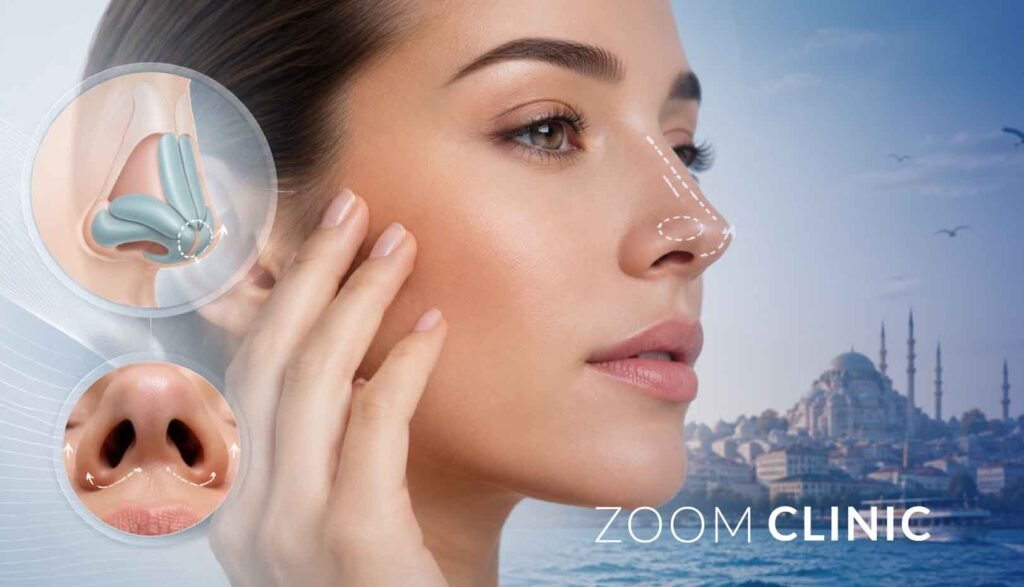
Independent nasal tip plasty is a cosmetic surgical procedure that focuses exclusively on the lower part of the nose. The goal is to adjust the shape, size, or angle of the tip without touching the nasal bone or upper bridge.
The procedure works by reshaping the lower lateral cartilages through precise suturing techniques or removal of small amounts of excess cartilage, depending on the nature of the issue.
The key difference from full rhinoplasty lies in scope: the former addresses a specific, localized issue in the tip alone, while the latter may involve adjusting the bridge, correcting deviation, or addressing breathing problems.

Nasal Tip Plasty
The Difference Between Tip Plasty and Full Rhinoplasty
| Element | Tip Plasty | Full Rhinoplasty |
| Scope of intervention | Nasal tip only | Entire nose (bridge, septum, tip) |
| Procedure duration | Relatively shorter | Longer, depending on complexity |
| Anesthesia | Often local with sedation | Often general |
| Recovery period | Relatively shorter | Longer |
| Addresses breathing issues? | No, except in rare limited cases | Yes, when needed |
Types of Nasal Tip Issues the Procedure Addresses
- Nasal Tip Ptosis: where the tip points downward, especially when smiling.
- Bulbous Tip: when the tip appears wider or rounder than proportionate to the rest of the nose.
- Asymmetry between the two sides of the tip: from natural cartilage variation or a previous injury.
- A split tip or irregular bulge: a minor cartilage symmetry issue correctable without touching the rest of the nose.
In all these cases, the problem must be confined to the tip, with the rest of the nose functionally healthy.
Who Is a Good Candidate for This Procedure?
Candidacy is based on the specific nature of the problem, not a general desire to “change the nose.”
Ideal Candidates for Tip Plasty
- Has a specific issue confined to the nasal tip only, as described above.
- Is generally satisfied with the nasal bridge and rest of the structure, with no breathing complaints.
- Has no noticeable septal deviation.
- Has realistic expectations for the adjustment’s outcome.
An important note specifically for patients with an Arabic nose profile: cartilage structure and skin thickness in the Arabic nose differ from the Western nose; thicker skin dampens how visible small internal adjustments are on the outer surface.
This means assessing whether Tip Plasty alone، without additional reinforcement to the cartilage support، will be sufficient requires a surgeon experienced specifically with this nose type, not a one-size-fits-all assessment.
Cases That Need Full Rhinoplasty Instead
- Deviated Septum: requires structural correction beyond a localized tip intervention.
- Breathing problems and nasal obstruction: require functional evaluation and broader intervention.
- Structural deformities in the nasal bridge: such as a prominent hump or bone asymmetry.
- A desire for a comprehensive change to the nose’s shape: here, rhinoplasty for men or full rhinoplasty for women is the more suitable option in terms of outcome and overall cost.

Nasal Tip Plasty
Surgical Techniques (Open and Closed)
The closed technique is performed through small incisions inside the nostrils, leaving no visible external mark, and suits simple adjustments. The open technique involves a small incision in the columella, giving the surgeon clearer access to the tip cartilage, and is preferred for finer adjustments.
Local Anesthesia vs. General Anesthesia
Given the limited scope of intervention, the procedure can often be performed under local anesthesia with light sedation, reducing general-anesthesia risks and speeding up initial recovery. Some surgeons or patients may still prefer general anesthesia, especially for longer or more precise adjustments. The final decision is made jointly by the surgeon and anesthesiologist.
The Nature of the Intervention on Tip Cartilage
The surgeon works on the lower lateral cartilages via suturing (dome sutures), removing a small amount of excess cartilage, or adding a small supportive graft when needed. The goal is always to preserve the tip’s supportive function without weakening the structure in a way that affects future breathing.
The Procedure Step by Step
Before the Procedure: Examinations and Consultation
The journey begins with a detailed consultation examining the nose’s shape from multiple angles and the patient’s wishes. Evaluation includes skin thickness, cartilage flexibility, and nostril symmetry, plus ruling out breathing issues or septal deviation. The patient may be asked to undergo basic blood tests and avoid blood thinners and smoking before the scheduled appointment.
During the Procedure: The Surgical Sequence
After anesthesia, the surgeon makes the incision, reaches the tip cartilage, and reshapes it as agreed during consultation. Once symmetry and shape are confirmed, the incision is closed with fine sutures, and a light external splint protects the tip during initial recovery. The procedure generally takes less time than full rhinoplasty.
Recovery After Nasal Tip Plasty
The First Days After the Procedure
Mild swelling and redness around the tip are expected and normal, often felt as tightness rather than sharp pain. Patients are advised to sleep with their head elevated, avoid touching or pressing the nose, and avoid blowing the nose for several weeks. Cold compresses around the eyes help reduce swelling.
When the Near-Final Result Appears
Visible swelling gradually subsides over the first few weeks, with the new shape becoming clear over roughly the first month. The precise final shape may take several months to fully settle, as mild internal swelling continues to gradually recede. According to the American Society of Plastic Surgeons (ASPS), initial swelling subsides within a few weeks, while reaching a fully settled final nasal contour can take up to a year in some cases، general nasal-surgery guidance referenced here even though Tip Plasty’s scope is narrower.
Returning to Work and Daily Activities
Given the surgery’s limited scope, many patients return to work within a few days. Strenuous exercise or activities risking direct trauma to the nose should be avoided for several weeks, along with keeping follow-up appointments.
Comparison: Independent Tip Plasty vs. Full Rhinoplasty
| Element | Tip Plasty | Full Rhinoplasty |
| Duration | Relatively shorter (roughly 1–2 hours) | Longer, depending on complexity |
| Anesthesia type | Often local with sedation, sometimes general | Often general |
| Initial recovery period | A few days | Roughly one to two weeks |
| Scope | Nasal tip only | Bridge, septum, and tip together when needed |
| Addresses breathing issues | No, in the vast majority of cases | Yes, when there’s a medical indication |
| Relative cost | Usually lower, given the limited scope | Higher, depending on complexity |
The Cost of Nasal Tip Plasty in Turkey
The cost of nasal tip plasty in Turkey varies by clinic, typically quoted in US dollars for international patients. Because the scope of intervention is narrower than full rhinoplasty, cost tends to be relatively lower، but an accurate quote after a direct examination is always preferable to general figures.
Factors Affecting the Cost
- Surgeon experience and reputation: more experienced surgeons in fine tip work often charge more.
- Technique used: the open technique may cost more than the closed technique.
- Whether combined with additional procedures: such as fat injections or a minor lip adjustment in the same session.
What the Price Usually Includes in Turkey
Most clinics in Turkey offer packages covering the initial consultation, the procedure, follow-up sessions, and sometimes accommodation and transport for patients from abroad. Always request a written breakdown of what’s included before confirming a booking.
Potential Risks and When to See a Doctor
Nasal Tip Plasty
Medically reviewed by: Dr. Esma Suleyman, ENT Specialist
Like any surgical procedure, nasal tip plasty carries potential risks, though generally at a low rate when performed by a qualified surgeon. The American Academy of Facial Plastic and Reconstructive Surgery (AAFPRS) describes good candidates for tip refinement as being in overall good health with realistic expectations for improvement, not a dramatic transformation.
As for the actual risks, the NCBI Bookshelf, part of the U.S. National Library of Medicine (NLM) within the National Institutes of Health (NIH), notes that the most prominent risks generally associated with nasal surgery include bleeding, swelling, bruising, infection, scarring, a temporary or, rarely, permanent change in the sense of smell, and dissatisfaction with the final aesthetic outcome, in addition to the possibility of needing an additional adjustment in limited cases.
This information concerns nasal surgery generally; the rate for Tip Plasty specifically tends to be lower given its narrower scope compared with full rhinoplasty.
Common and Rare Risks
Relatively common risks: temporary swelling and bruising around the tip and eyes, and mild bleeding during the first days. A temporary sensation of numbness or slight sensory change in the tip area may also occur, resolving over weeks.
Rare risks include: localized infection, delayed wound healing, or slight asymmetry in the final result that may require a minor later adjustment. Avoiding many of these risks starts with choosing the right surgeon، see our guide on mistakes to avoid in rhinoplasty for practical details.
Signs That Require Immediate Contact With Your Doctor
Contact the medical team immediately for: bleeding that doesn’t stop with the usual light pressure, unusually increasing pain after 48–72 hours, increasing redness with localized warmth or unusual discharge, fever, or sudden, noticeably asymmetric swelling.
Frequently Asked Questions
Is independent tip rhinoplasty painful?
The pain is usually limited and much less than many imagine, especially compared to a full rhinoplasty. Most patients feel mild tightness or pressure in the first few days, and any discomfort can be easily managed through simple pain relievers prescribed by the treating physician to control temporary symptoms.
How long does a tip rhinoplasty procedure take?
The procedure usually takes about one to two hours, which is a noticeably shorter duration compared to full nose surgeries. This is because the surgical intervention is strictly limited to the cartilage area without the need to modify the underlying bones of the nose.
Does the procedure require general anesthesia?
It is not strictly necessary to undergo the procedure under total anesthesia. Many cases are successfully performed under local anesthesia accompanied by light and comfortable sedation, but the final decision depends on the surgeon’s evaluation of the health condition and sometimes on the patient’s preference.
When can I return to work after the procedure?
Many patients can return to work within a few days, not exceeding a week, especially if the nature of the work does not require strenuous physical effort. As for physical activities and vigorous exercise, it is recommended to postpone them for several weeks to protect the final result.
Conclusion
Independent nasal tip plasty (Tip Plasty) is a precise, targeted surgical solution for those with a specific issue confined to the nasal tip alone, without needing a broader full rhinoplasty. Success depends fundamentally on accurate diagnosis: is the problem genuinely confined to the tip, or part of a broader issue? This can only be assessed through a direct medical consultation with a specialist surgeon.
If you’re considering adjusting your nasal tip’s shape, reach out to the Zoom Clinic team to book your free consultation and determine the option best suited to your case.
Get the special offer today from Zoom Clinic