
Many people travel to Turkey to get their dream smile at a reasonable cost, but the question that always comes up before booking is: how long do veneers in Turkey actually last? Do they differ from veneers in Europe or America? And is the investment worthwhile in the long run?
The truth that many articles do not state openly is that the lifespan of veneers is not linked to the country where they were placed, but to three main factors: the type of material used, the skill of the dentist, and your daily care routine. In this guide, you will find a complete and objective answer, free from exaggerated marketing.
Veneers in Turkey, Is the Lifespan Different?
content
What Actually Determines Veneer Durability?
Before discussing numbers, it is important to understand what controls the lifespan of veneers. It depends on three interconnected core pillars:
First: The Material. Veneers made from high-quality porcelain or zirconia differ fundamentally from composite veneers in terms of hardness, stain resistance, and resistance to cracking.
Second: Quality of Execution. How precisely the dentist prepares the tooth and bonds the veneer to the enamel layer rather than the dentin determines the bonding strength and therefore the lifespan. A veneer bonded to dentin is far less stable than one bonded to enamel.
Third: Patient Care. The daily routine of cleaning and avoiding harmful habits makes the biggest difference between a veneer that lasts ten years and one that lasts twenty.
Does Turkey’s Location Affect Veneer Quality?
This is the question on many people’s minds, and the straightforward answer is: No, provided you choose the right clinic.
Turkey uses the same internationally recognized materials as Europe and America, from E-max porcelain to high-strength zirconia. The real difference lies in lower operating costs, not lower standards. What you need to pay attention to is choosing a clinic with a professional in-house laboratory and a dentist specifically trained in cosmetic dentistry, as quality varies from clinic to clinic, just as it does in any country.
How Long Do Veneers Last
How Long Do Veneers in Turkey Last by Type?
Porcelain Veneers (E-max), The Longest-Lasting Option
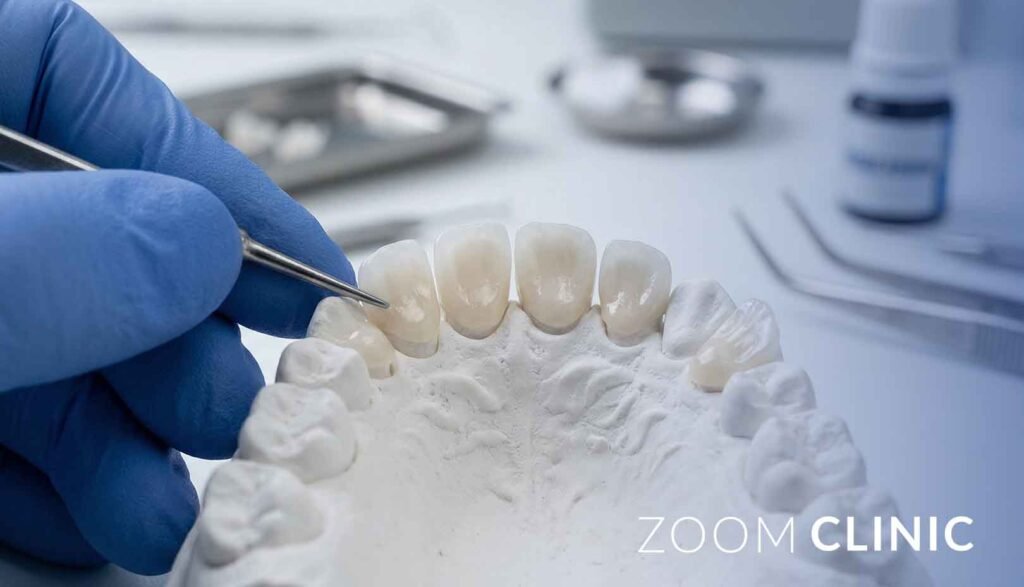
E-max veneers, made from lithium disilicate ceramic, are the most popular choice at cosmetic dental clinics in Turkey, and for good reason. They feature a non-porous surface that resists staining and a natural appearance that mimics the translucency of real teeth. Their lifespan ranges from 10 to 20 years, and some studies indicate a survival rate of up to 95% after ten years with proper care.
Zirconia Veneers, The Strongest Structurally
Zirconia is considered the strongest in terms of mechanical hardness, and it is the preferred choice for patients who grind their teeth or need to cover larger defects. Its lifespan extends from 15 to 20 years or more with modern technologies, though long-term clinical data for newer variants is still accumulating.
Composite Veneers, The Most Affordable and Shortest-Lasting
Many choose them for their lower cost and the possibility of placement in a single session. However, composite is a relatively porous material, making it more prone to staining from coffee, tea, and smoking. Its lifespan ranges from 5 to 10 years, and may be less if care habits are not maintained.
Lumineers, Ultra-Thin and Resilient
Lumineers are a special type of ultra-thin veneer that usually does not require tooth preparation. They are suitable for cases requiring minor changes in color or shape. Their lifespan ranges from 5 to 20 years depending on the quality of execution and care, though their thinness makes them less resistant to mechanical pressure compared to other types.
| Veneer Type | Material | Lifespan | Durability Level |
| E-max (Porcelain) | Lithium ceramic | 10–20 years | Excellent |
| Zirconia | Zirconium oxide | 15–20+ years | Exceptional |
| Composite | Composite resin | 5–10 years | Moderate |
| Lumineers | Thin porcelain | 5–20 years | Moderate to Good |
Factors That Determine How Long Veneers Last in Turkey
The Role of the Clinic and Dentist in Extending Veneer Life
The clinic and dentist play a fundamental role in determining veneer durability from the very first moment. The most important things to consider:
• Precision of tooth preparation: Bonding the veneer to enamel rather than dentin provides stronger adhesion and a longer lifespan.
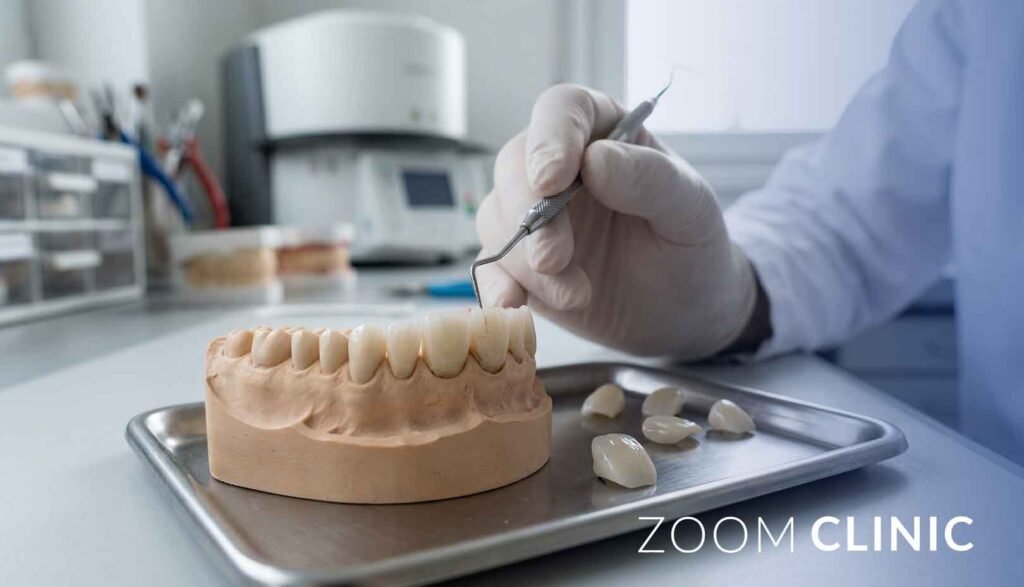
• Laboratory quality: Veneers made in a professional in-house laboratory using precise digital technologies are more stable than those made hastily.
• Occlusion balance: A dentist who digitally analyzes bite force distribution ensures the veneer is not subjected to unbalanced pressures that shorten its life.
How Long Do Veneers Last
Your Daily Habits and Their Direct Impact on Duration
After leaving the clinic in Turkey, you become the biggest factor in determining your veneer’s lifespan. The following habits have a direct impact:
• Regularly consuming coffee, tea, and red wine accelerates staining of composite veneers in particular.
• Using teeth to open packaging or biting hard objects puts stress on veneers and exposes them to cracking.
• Smoking accelerates veneer discoloration and damages the surrounding gum tissue, reducing its functional lifespan.
Teeth Grinding (Bruxism), The Silent Enemy of Veneers
Nighttime teeth grinding is one of the most dangerous threats to veneers, as it exerts repeated, unconscious pressure on the teeth during sleep. This pressure leads to veneer cracking or gradual detachment even in the best types. If you suffer from this problem, wearing a night guard is not a luxury, it is a genuine protective necessity for your investment.
How to Extend the Life of Your Veneers After Returning from Turkey
The Correct Daily Care Routine
Maintaining veneers does not differ fundamentally from caring for natural teeth, but with some important details:
• Use a soft toothbrush and non-abrasive toothpaste twice daily. Abrasives scratch the veneer surface, especially composite, making it more prone to staining.
• Dental floss or a water flosser is essential for maintaining the health of the gum tissue surrounding the veneer. Unhealthy gums recede over time, exposing veneer margins and causing aesthetic and health problems.
Foods and Habits That Shorten Veneer Life
Some foods and habits pose a direct risk:
• Very hard foods such as biting ice, nuts, and hard candy expose veneers to cracking.
• Sticky foods such as chewy candy and caramel can pull on the veneer and weaken the bonding layer.
• Highly acidic drinks such as carbonated beverages gradually affect the bonding layer.
Regular Follow-Up Visits, Why They Are Indispensable
Many believe that veneers need no follow-up after placement, this is a common mistake. Visiting the dentist every six months allows early detection of any changes in the veneer or surrounding gum tissue, and professional polishing that maintains surface shine. A small problem caught early is treated easily and inexpensively, but if neglected it may require complete replacement.

How Long Do Veneers Last
When Do You Know Your Veneers Need Replacing?
Warning Signs You Should Not Ignore
Veneers usually do not fail suddenly; they give warning signs beforehand. The most notable include:
• Noticeable color change despite good care, especially at the veneer margins.
• Appearance of a gap or fine line between the veneer and the gum, a sign of gum recession.
• Feeling rough or sharp edges when running the tongue over the veneer.
• Sudden sensitivity in the tooth, which may indicate leakage under the veneer or partial detachment.
• Visible cracking, even if small, as it facilitates bacterial buildup.
What Happens If an Expired Veneer Is Not Replaced?
Neglecting an expired veneer does not only affect aesthetics, it leads to deeper problems. Leakage under a cracked or partially detached veneer creates an ideal environment for bacterial growth and hidden decay in the tooth beneath it. This can reach the point of needing root canal treatment or even tooth extraction in severely neglected cases. Timely replacement protects the natural tooth beneath the veneer and saves the cost of larger treatments later.
Conclusion
How long do veneers last in Turkey? The answer is not a fixed number, but a complete equation with three components: the clinic you chose, the material you had placed, and the care you give them every day.
Porcelain and zirconia veneers executed by an experienced dentist using world-class materials are capable of accompanying your smile for ten years and beyond ,while simple neglect can cut that lifespan in half.
Turkey today is a trusted medical destination that combines quality with reasonable cost. However, the smart decision does not start with booking a flight,it starts with choosing the right clinic and asking the right questions before sitting in the dentist’s chair.
read also Treating Gum Recession After Veneers: Causes, Prevention, and Repair Options
Frequently Asked Questions About Veneer Lifespan in Turkey
Do veneers in Turkey last as well as those in Europe and America?
Quality is not determined by the country, but by the type of material used and the dentist’s skill. Turkey uses world-class materials such as porcelain and zirconia, the same ones used in Europe and America. The primary difference is lower cost due to reduced operating expenses, not treatment quality. Choosing a reputable clinic with an in-house laboratory and a dentist specializing in cosmetic dentistry guarantees results identical to what you would get in any European capital.
Can veneers be repaired without full replacement?
Yes, if the problem is in a single veneer only, such as cracking or detachment, that single shell can be replaced without touching the rest. However, dentists advise consulting your dentist as soon as any change is noticed, to prevent the problem from worsening and repair costs from rising later.
Does teeth grinding significantly shorten veneer lifespan?
Yes, nighttime teeth grinding (bruxism) is among the most common causes of early veneer damage. The repeated pressure weakens the outer layer and causes cracking. The ideal solution is to wear a night guard, which protects the veneer and noticeably extends its life. It is a simple measure, but it makes a significant difference in the long run.
How often should I visit the dentist to maintain my veneers?
Dentists recommend a regular visit every six months for professional cleaning and examination of the veneer and surrounding tissue. These visits allow the dentist to detect any problems early before they worsen, and ensure the veneer maintains an ideal appearance throughout its lifespan.
Does veneer color change over time?
Porcelain and zirconia veneers are nearly immune to staining thanks to their non-porous surface. Composite veneers, however, are more prone to yellowing from coffee, tea, and smoking. Regardless of type, avoiding staining beverages and using non-abrasive toothpaste helps maintain veneer whiteness for as long as possible.
Are you considering dental cosmetic treatment in Turkey? Contact us at Zoom Clinic for a free consultation with dental tourism specialists who will accompany you every step of the way.
Get the special offer today from Zoom Clinic