
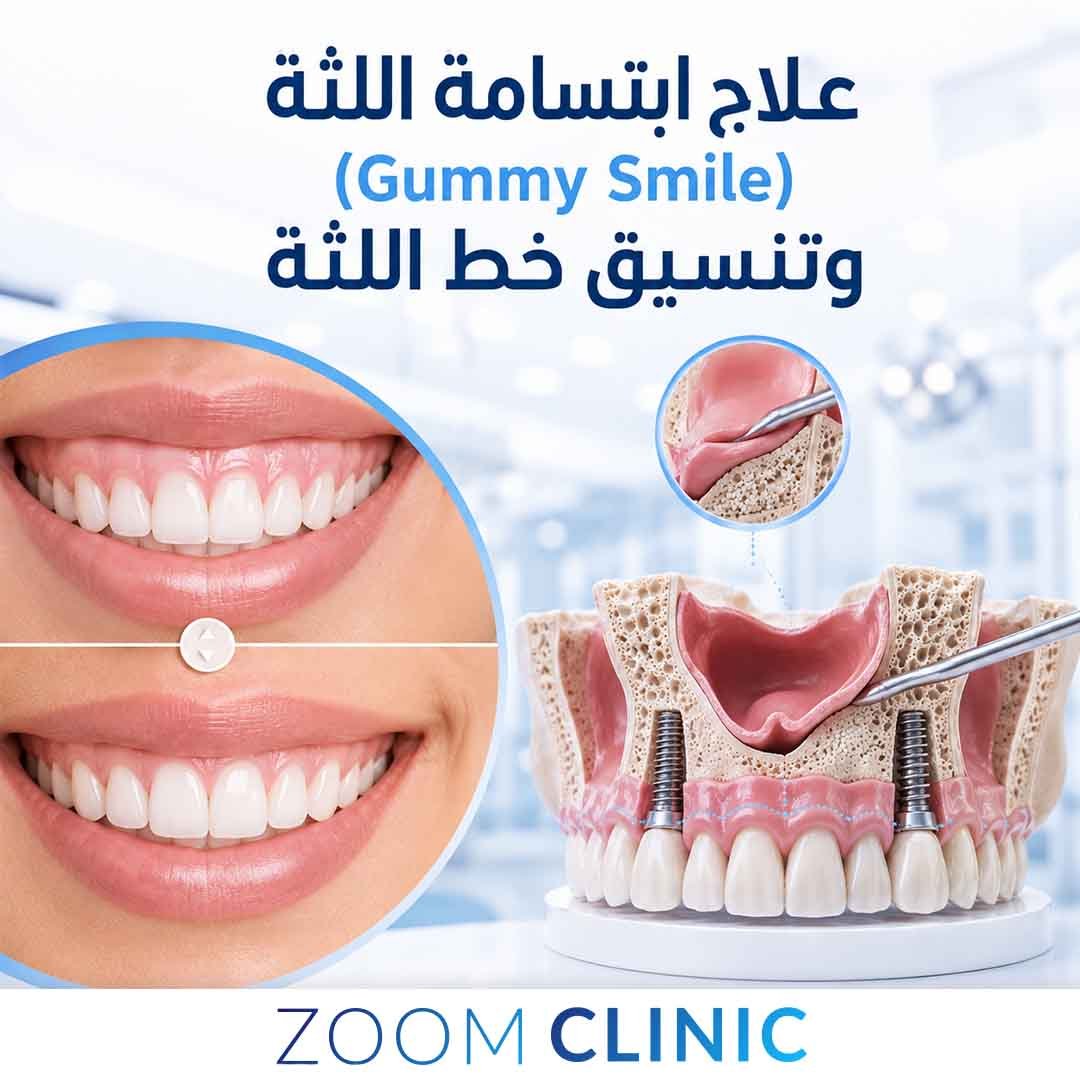
A gummy smile occurs when a noticeable portion of the upper gum tissue shows when smiling, rather than the teeth alone, due to anatomical, muscular, or occasionally purely medical factors. In most cases this isn’t a serious health issue, but it can make someone self-conscious when talking or laughing in front of others.
The reassuring news is that several safe cosmetic solutions exist today, ranging from temporary injections to precise cosmetic surgery, with the right specialist determining the best option only after a real clinical examination, not by guesswork. This guide covers the causes of a gummy smile, the leading treatment methods, approximate cost in Turkey, and the expected recovery path.
Content
What Is a Gummy Smile (Excessive Gingival Display)? Definition and Causes
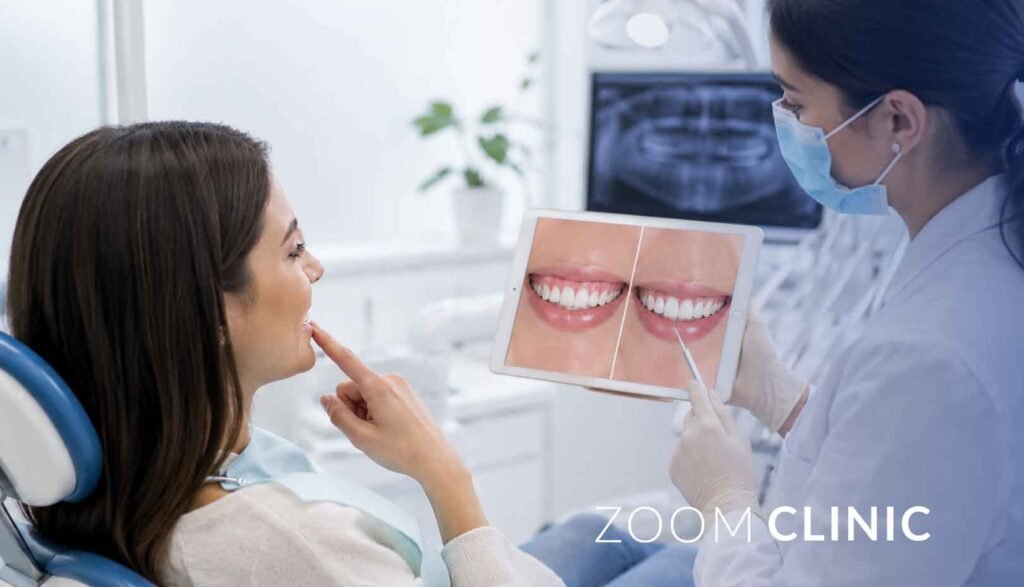
A gummy smile is a cosmetic term describing a greater-than-usual proportion of upper gum tissue visible during a full smile, so that the gums appear to “dominate” the teeth rather than framing them harmoniously. It typically results from a mismatch between upper lip length, gum line height, tooth position, and sometimes the size of the upper jawbone itself. While it’s primarily an aesthetic concern, an accurate diagnosis requires a genuine clinical exam to pinpoint the root cause, since each cause calls for an entirely different treatment approach.
What Causes a Gummy Smile?
Several factors can lead to a gummy smile, most notably:
- Gingival hyperplasia (excess gum tissue growth): an increase in the gum tissue itself, which may be congenital, linked to chronic gum inflammation, or, less commonly, related to certain medications known to affect gum tissue growth.
- Hyperactive upper lip muscle: when the upper lip rises higher than usual while smiling due to excess muscular activity, exposing more gum tissue.
- Anatomically short upper lip: some people naturally have a shorter-than-average upper lip, leaving the gums visible almost permanently, even without a full smile.
- Altered passive eruption: when the gum tissue doesn’t fully recede from the teeth during development, leaving teeth looking “short” and the gums more prominent.
- Vertical maxillary excess: the most clinically complex cause, where the issue lies structurally in the jawbone itself rather than in soft tissue alone.
How Is a Gummy Smile Diagnosed?
Diagnosis always starts with a direct clinical exam, in which the dentist measures how much gum shows at maximum smile in millimeters, and observes the upper lip’s movement pattern during natural speech and laughter, not only when asked for a “posed smile.” The exam also assesses visible tooth crown length and how the teeth relate to one another, and may include X-rays if a structural jaw cause is suspected.
The goal of this comprehensive evaluation is to pin down the actual root cause before proposing any treatment plan, because treating the wrong cause won’t give a satisfying result no matter how advanced the technique used.
When Does Your Smile Actually Need Gum Cosmetic Treatment?
Not every smile that shows some gum tissue needs medical intervention, mild gum display is considered normal, and even aesthetically appealing, in many cases. The line between normal and excessive comes down to how many millimeters show at a full smile, along with how much the person themselves is bothered by their smile’s appearance.
What’s the Normal Range of Gum Display When Smiling?
According to specialized dental sources, a gum display of 1 to 2 mm at full smile is considered entirely normal, and can even lend a youthful quality to the smile. Medical sources vary somewhat on where “excessive gingival display” (a gummy smile) actually begins: some researchers classify anything beyond 2 mm as excessive, while others require more than 3 to 4 mm before calling it a true gummy smile. This doesn’t mean everyone showing more than 2 mm necessarily needs treatment, ultimately it’s a personal aesthetic decision made in consultation with the dentist.
Is It Always Cosmetic, or Could It Be Medical?
In the majority of cases, a gummy smile is a purely cosmetic matter with no health risk. In less common cases, however, excess gum growth may stem from active gum inflammation that needs medical treatment first, or from a side effect of certain long-term medications, such as some anticonvulsants or immunosuppressants known to be linked to increased gum tissue volume.
In such cases, the underlying medical cause must be addressed before considering any cosmetic procedure, since cosmetically treating gums over active inflammation won’t give a lasting result, and may worsen the problem.
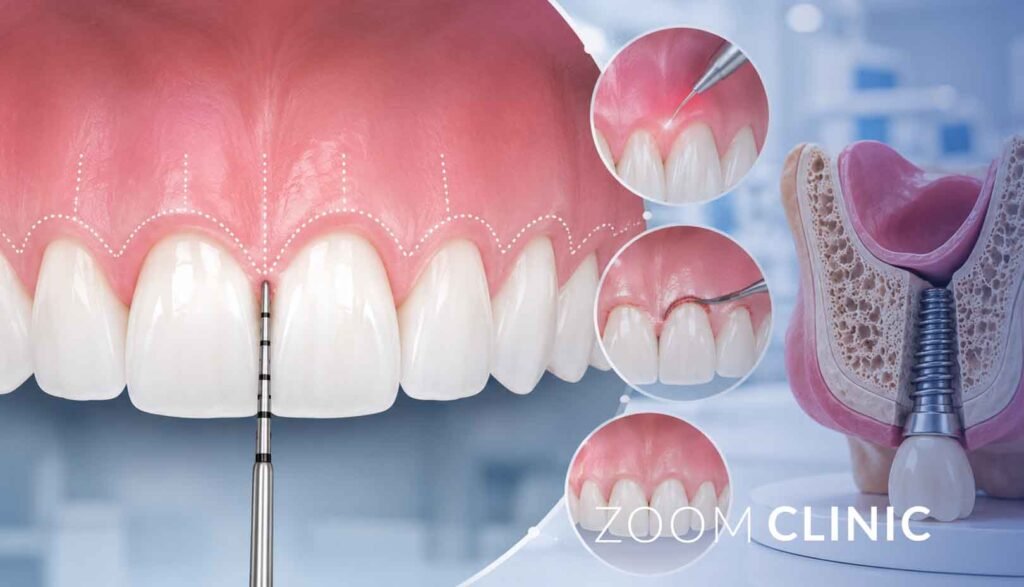
Leading Methods for Treating a Gummy Smile and Contouring the Gum Line
The right treatment method depends entirely on the gummy smile’s root cause, so treatment options generally fall into two main categories: temporary non-surgical solutions, and surgical or semi-surgical options with longer-lasting results. Choosing the right method rests entirely on the dentist’s assessment of the gums, lip, and jawbone.
Laser Gingivectomy
This procedure uses a laser to remove excess gum tissue and reshape the gum line with high precision, making it the best fit for cases caused by excess gum tissue growth itself or incomplete tooth eruption. Its main advantage is that the laser noticeably reduces bleeding during the procedure compared with traditional surgical instruments, and it also speeds up tissue healing afterward thanks to the sterilizing effect of heat on the treated area.
Traditional Gum Reduction Surgery
In cases where excess gum growth runs deeper and requires reshaping part of the bone surrounding the tooth (a procedure known as crown lengthening), traditional surgery with precision surgical instruments becomes the better fit rather than laser alone. This type of intervention gives the dentist greater control over reshaping bone structure when needed, something surface-level laser treatment alone can’t provide.
Lip Repositioning
This procedure is used specifically for cases caused by a hyperactive upper lip muscle, where the dentist secures the lip in a lower resting position when smiling through a relatively minor surgical procedure that doesn’t touch the teeth or gums themselves, but rather redistributes how the lip muscles move.
Studies published in peer-reviewed dental journals indicate that this technique delivers reasonably good cosmetic results through relatively minor surgery, though some cases may see partial relapse in the first weeks after surgery, so close follow-up with the dentist remains essential to assess how stable the result is.
Botox Injections for the Upper Lip Muscle
This is the fastest, least invasive non-surgical option, where Botox is injected into the muscle that lifts the upper lip to reduce its excess movement when smiling. According to a recent systematic medical review, the result typically appears within two to four weeks of injection, and remains effective for 12 to 24 weeks (roughly 3 to 6 months), after which a touch-up injection is needed to maintain the look. This option suits those who want to try the result before committing to a permanent surgical decision.
Step-by-Step: How Gum Line Contouring Is Performed
Whichever method is chosen, the gummy smile treatment journey follows a clear sequence from the initial consultation through to performing the procedure, ensuring the right solution is chosen for each individual case.
Consultation and Examination Before the Procedure
The journey begins with a comprehensive consultation, during which the dentist performs a precise clinical exam of the gum line and lip movement, and may request imaging or a panoramic X-ray if a structural jaw cause is suspected.
At this stage, the exact root cause of the excess gum display is identified, and based on that, the most suitable treatment method is proposed from the available options, along with a clear explanation of the expected result and its realistic limits.
What Happens on Procedure Day?
On the day of the procedure itself, local anesthesia is used on the treated area to ensure the patient’s full comfort throughout the work. Most sessions take roughly 30 to 90 minutes, with the exact duration varying by the chosen procedure type and how extensive the area to be adjusted is. Most patients feel only mild pressure during the procedure, with no real pain, thanks to effective local anesthesia, and can usually leave the clinic the same day.
How Much Does Gummy Smile Treatment Cost in Turkey?
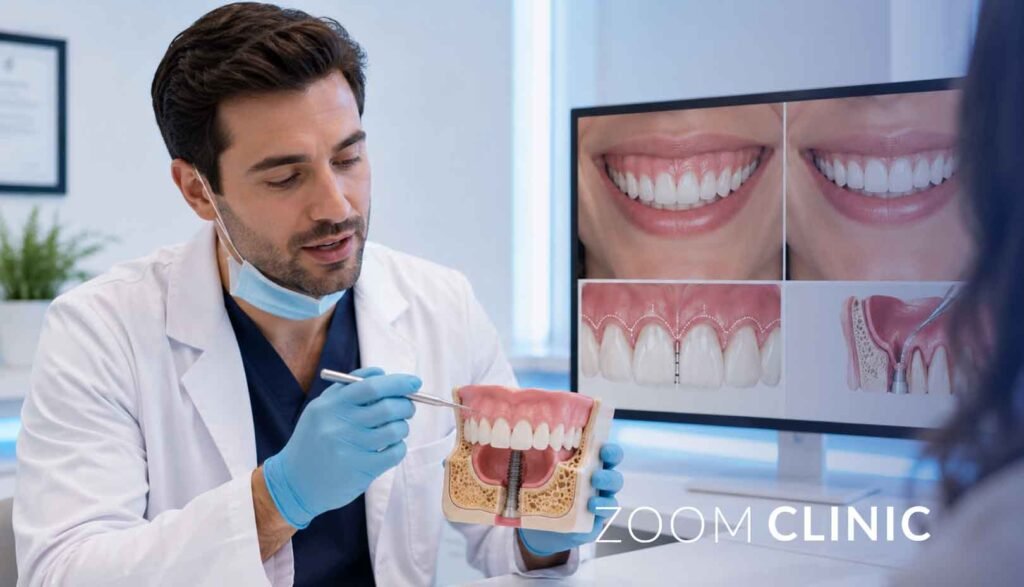
There’s no single standard price for gummy smile treatment, since the final cost varies considerably depending on the chosen treatment method, how extensive the case is, and whether the procedure is combined with other cosmetic dental treatments such as veneers or a full Hollywood smile makeover within one treatment journey.
As general guidance only, published pricing at accredited Turkish clinics for limited-scope gum contouring tends to fall in the range of roughly 50 to 100 euros per tooth when added as an accompanying procedure to other cosmetic dental work, while the cost of more extensive procedures (such as lip repositioning or surgery spanning several teeth) varies according to the dentist’s direct assessment of the case. The exact price is determined only after a clinical examination.
What Factors Affect the Price?
The final price is shaped by several combined factors: the chosen treatment method (laser is usually less costly than surgery involving bone), the number of teeth or area of gum requiring adjustment, whether the procedure is combined with veneers or teeth whitening as part of a full Hollywood smile package, and the treating dentist’s experience along with the clinic’s equipment level. Combining more than one procedure within a single treatment trip to Turkey is often more cost-effective than undergoing each treatment separately.
Recovery After Gummy Smile Treatment and When the Final Result Appears
The recovery path varies slightly depending on the method used, but overall it’s a relatively short process that doesn’t require a long break from daily life.
The First Few Days After the Procedure
Mild swelling and slight redness in the treated gum area during the first few days is completely normal, and may come with some sensitivity when eating very hot or cold foods.
During this period, it’s advisable to eat soft foods and avoid direct chewing on the treated area, while gently maintaining oral hygiene with a soft-bristled brush and an antibacterial mouthwash as recommended by the dentist, to reduce the risk of inflammation and speed up healing.
When Does the Final Result Appear, and When Can I Return to Normal Life?
Most patients return to their usual daily activities within a few days of the procedure, while complete gum tissue healing typically takes two to four weeks depending on how extensive the treated area was and the type of procedure performed.
The final cosmetic result becomes fully apparent once the gums have fully healed and settled into their new shape, the stage at which the smile’s overall harmony can be properly assessed.
Who Is a Good Candidate? Safety and Potential Risks
Like any cosmetic medical procedure, gummy smile treatment works best when applied to the right candidate and under the supervision of a specialist dentist who takes the necessary precautions to minimize risk.
Who Is the Ideal Candidate for Gum Cosmetic Treatment?
The ideal candidate is someone in generally good oral health, free of active gum inflammation or untreated dental disease, who shows a clearly excessive gum display that bothers them aesthetically. It’s also preferable that the person isn’t a heavy smoker, since smoking slows down gum tissue healing after any surgical intervention, however minor.
What Are the Potential Complications, and How Are They Minimized?
Potential complications are generally limited and mild when the procedure is performed by a genuinely experienced specialist dentist, and include temporary tooth sensitivity, mild bleeding during the first few days, or transient swelling in the treated area. The likelihood of these complications drops significantly when choosing a dentist with real experience in cosmetic dentistry, and when closely following post-procedure care instructions.
It’s important to note that any severe or persistent pain, or bleeding that doesn’t stop, requires contacting the treating dentist immediately without delay.
Gummy Smile Treatment Comparison Table
| Treatment Method | Type of Intervention | Approx. Session Length | Approx. Recovery Period | Result Durability |
| Laser Gingivectomy | Semi-surgical, local anesthesia | 30–60 minutes | 1–2 weeks | Relatively permanent (if root cause is treated) |
| Traditional Gum Reduction Surgery | Surgical, local anesthesia (± bone reshaping) | 45–90 minutes | 2–4 weeks | Relatively permanent |
| Lip Repositioning | Minor surgical, local anesthesia | 30–45 minutes | 1–2 weeks | Long-lasting in most cases, with possible partial relapse in some per published studies |
| Botox Injections | Non-surgical | 10–15 minutes | No real recovery period needed | Temporary, roughly 3–6 months |
Frequently Asked Questions About Gummy Smile Treatment
Is gummy smile treatment painful?
No, most gummy smile treatments are performed under full local anesthesia, so the patient feels no real pain during the procedure itself, only mild pressure at times. Once the anesthesia wears off, some mild sensitivity or discomfort may appear for a few days, and it’s easily managed with simple pain relievers the dentist prescribes if needed.
How long does a laser gum contouring session take?
Most laser gum contouring sessions take roughly 30 to 60 minutes, depending on the area of gum to be reshaped. The session is usually completed in a single visit, and patients can typically return to their normal activities the same day or the day right after.
Is the gum line contouring result permanent?
How lasting the result is depends on the root cause and the method chosen. Procedures that remove excess gum tissue via laser or traditional surgery typically give a relatively permanent result, while lip repositioning may see partial relapse in some cases requiring follow-up, and Botox injections are inherently a temporary solution needing periodic touch-ups every few months.
Can a gummy smile be treated without surgery?
Yes, Botox injections into the upper lip muscle are the leading non-surgical option, and are specifically suited to cases caused by excess muscular activity rather than a genuine increase in gum tissue or a structural jawbone issue, where it wouldn’t be of much benefit.
When can I return to my normal life after the procedure?
Most patients return to their usual daily activities within just a few days of the procedure, while avoiding hard or very spicy foods for a short period as recommended by the dentist until the gum tissue’s initial healing is complete.
Conclusion
Gummy smile treatment today comes with multiple options, ranging from simple temporary solutions like Botox to longer-lasting ones like laser treatment, traditional surgery, and lip repositioning.
There’s no single “best” method that suits everyone, choosing the right treatment depends entirely on each person’s specific root cause for excess gum display, something that can only be determined through a genuine clinical exam by a specialist dentist.
If you’re considering improving your smile’s harmony, the right first step is a medical consultation that assesses your specific case before any decision. [Contact us now to book your free consultation] and start your journey toward a more balanced smile with confidence.
read also : Cosmetic Dentistry Services at Zoom Clinic – Cost of Veneers in Turkey 2026
Written by the Medical Content Writing Team at Zoom Clinic
Medically reviewed by Dr. Mübeşşir Rajjob
Get the special offer today from Zoom Clinic