
If you’re considering dental treatment in Turkey and wondering which option suits you better, ceramic fillings or amalgam (silver) fillings, you are far from alone. This is among the most frequently asked questions by international patients visiting Turkish dental clinics, as the answer directly affects aesthetic, health, and economic considerations alike.
With Turkey consistently ranking at the top of global dental tourism destinations, cosmetic dental fillings in Turkey have become one of the most sought-after procedures, driven by high-quality outcomes and competitive pricing.
In this article, we present a comprehensive comparison between ceramic fillings and amalgam (silver) fillings in Turkey, covering materials, characteristics, health safety, pricing, and how to choose the most suitable option for your specific case.
content
What Are Ceramic and Amalgam (Silver) Dental Fillings?
Before diving into the comparison, it is essential to understand the nature of each material, as the differences begin at the compositional level, not merely in appearance.
Ceramic Fillings vs. Amalgam (Silver) Fillings
Ceramic Fillings (Porcelain and Zirconia), Materials and Properties
Ceramic fillings are fabricated from porcelain or zirconia, both of which are biocompatible materials that integrate well with the body’s tissues. They are distinguished by their ability to closely replicate the natural color and translucency of teeth, rendering them virtually invisible within the oral cavity.
Ceramic fillings are broadly categorized into two types: direct restorations, which are placed in a single appointment, and indirect restorations, such as inlays and onlays, which are custom-fabricated in a dental laboratory and cemented during a subsequent visit. These restorations exhibit high resistance to staining and discoloration, with a clinical lifespan ranging from 10 to 20 years when maintained properly.
Amalgam (Silver) Fillings, Composition and Clinical History
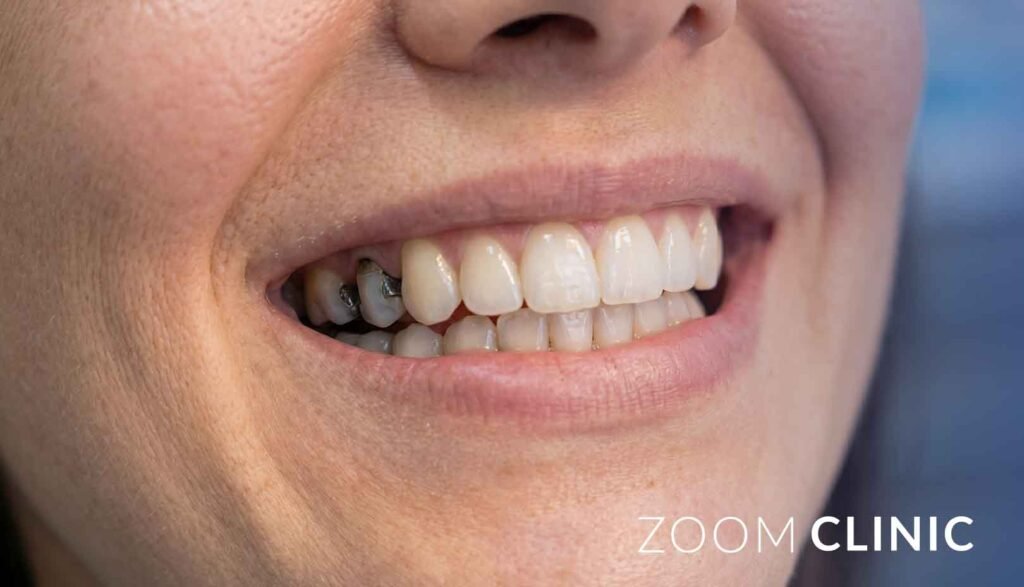
Amalgam fillings are a metallic alloy composed primarily of mercury, silver, tin, and copper. They have been used in restorative dentistry for over 150 years owing to their durability and low cost.
Their characteristic silver-metallic color stands in stark contrast to natural tooth structure, making them conspicuously visible when laughing or opening the mouth. Despite their mechanical strength, global regulatory trends are increasingly moving toward restricting or phasing out their use, particularly following recent legislative decisions in Europe.
A Comprehensive Comparison Between Ceramic and Amalgam (Silver) Fillings Across Key Criteria
Below is an in-depth comparison addressing the questions every patient asks before making a decision.
Aesthetic Appearance, The Most Obvious Distinction
There is no debate on this point: ceramic fillings are unequivocally superior from an aesthetic standpoint. The clinician can precisely shade-match the restoration to adjacent dentition, making it effectively indistinguishable to the naked eye. Amalgam fillings, by contrast, leave a striking metallic imprint that is plainly visible in posterior teeth and readily noticeable when the mouth is opened.
This distinction alone is sufficient to steer most patients traveling to Turkey for cosmetic purposes firmly toward ceramic restorations.
Durability and Projected Restoration Lifespan
Amalgam fillings are well recognized for their mechanical hardness and tolerance of heavy occlusal loading, with an average service life of 10 to 15 years. Ceramic restorations, particularly zirconia inlays and onlays, surpass this in longevity, potentially lasting up to 20 years with appropriate maintenance. Direct ceramic fillings (composite resin) have a comparatively shorter lifespan, typically requiring replacement after 5 to 10 years.
Health and Safety, What the WHO and the FDA Say
The World Health Organization (WHO), along with numerous regulatory bodies, has expressed concern regarding the mercury content of amalgam fillings, although it considers the exposure levels in routine restorations to be within acceptable safety limits for healthy adults.
Nevertheless, the European Union enacted a directive to broadly restrict amalgam use beginning in 2025, reflecting a growing international consensus toward its gradual elimination. Ceramic fillings, by contrast, are entirely free of controversial metallic components and are generally regarded as the biologically safer option, particularly for pregnant women, pediatric patients, and individuals with sensitivities or known allergies to metals.
Treatment Time, Single Session or Multiple Appointments?
Amalgam and direct composite fillings are completed in a single appointment lasting approximately 30 to 60 minutes. Indirect ceramic restorations such as inlays and onlays, however, require two appointments: the first for tooth preparation and impression-taking, and the second for final cementation following laboratory fabrication. This is a particularly relevant consideration for patients planning a brief dental tourism trip, as sufficient time must be allocated accordingly.
Cost of Dental Fillings in Turkey, A Numerical Comparison
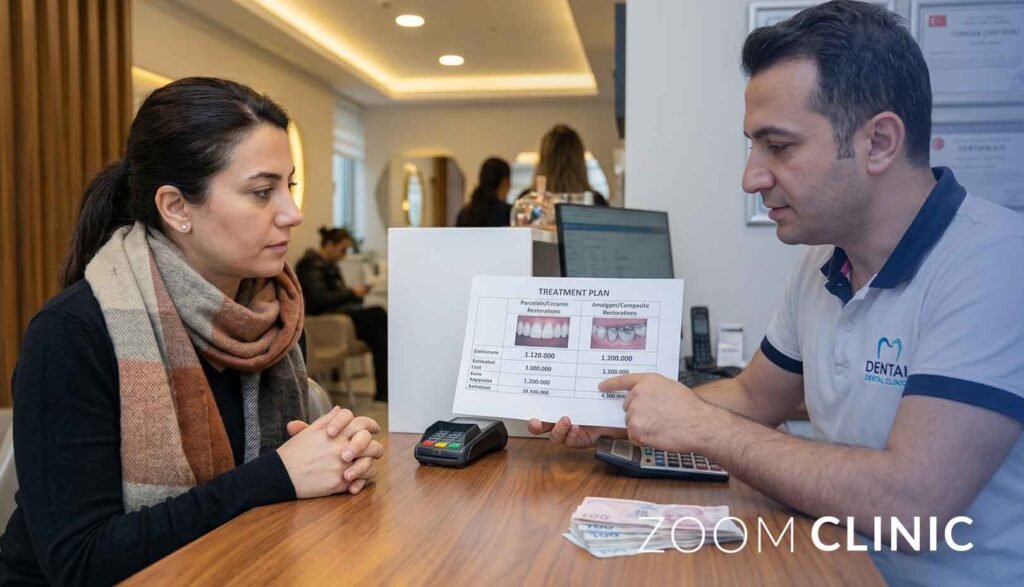
Cost is one of the most compelling factors driving thousands of patients annually toward dental treatment in Turkey. Below is a realistic breakdown of current pricing.
Ceramic Filling Prices in Turkey, 2025
Ceramic filling costs in Turkey vary by restoration type as follows:
- Composite resin (direct ceramic filling): €40 – €80 per tooth
- Porcelain or zirconia inlay/onlay: €150 – €320 per tooth
These figures are influenced by several variables, including clinic location (Istanbul tends to be marginally higher), the clinician’s level of expertise, and the technologies employed, such as three-dimensional digital scanning systems.
Amalgam (Silver) Filling Prices in Turkey, 2025
Amalgam fillings in Turkey are priced between €20 and €60 per tooth, making them the most economical option. That said, demand for amalgam restorations has been noticeably declining in modern Turkish clinics, which increasingly recommend ceramic and composite alternatives.
Projected Savings Compared to Europe and the United States
| Filling Type | Turkey | United Kingdom | United States |
| Direct Composite | €40–80 | £90–250 | $150–200 |
| Ceramic (Inlay/Onlay) | €150–320 | £300–600 | $600–1,000 |
| Amalgam | €20–60 | £60–150 | $100–125 |
This comparison clearly illustrates that patients can save between 50% and 70% of the equivalent cost in Europe or the United States, a figure that becomes particularly significant when multiple teeth require treatment.
Affordable Dental Implants in Turkey: How to Save Without Compromising Quality
Ceramic Fillings vs. Amalgam (Silver) Fillings
Who Chooses Ceramic and Who Chooses Amalgam?, A Personal Decision Guide
The choice between ceramic and amalgam fillings is not arbitrary; rather, it is guided by a set of objective clinical and personal factors.
Ceramic Fillings, Cases That Warrant Them
Ceramic restorations are the optimal choice in the following scenarios:
- The carious lesion involves an anterior tooth or one that is visible upon smiling
- A high-quality aesthetic outcome is a primary treatment objective
- The patient has a documented sensitivity or allergy to metals or mercury
- The patient is pregnant or the treatment involves a child
- A long-lasting restoration with minimal future replacement is desired
Amalgam Fillings, When They Remain a Clinically Acceptable Option
In specific circumstances, amalgam may still be considered a functionally acceptable restorative material, despite its declining use. A clinician may recommend it in:
- Posterior molar teeth subject to heavy masticatory forces in select patients
- Cases where the budgetary margin is significantly constrained and multiple teeth are involved
- Situations where the patient’s individual tolerance to alternative materials necessitates it, based on clinical judgment
Is Amalgam (Silver) Still Permitted in Turkey?, The Current Regulatory Position
As of the time of writing, the use of amalgam remains legally permissible in Turkey in specific clinical contexts, unlike the European Union, which has begun phasing it out from 2025 in accordance with the Minamata Convention on Mercury. However, the prevailing trend among contemporary Turkish dental practices is to move away from amalgam in favor of safer and more aesthetically pleasing alternatives.
Why Choose Turkey for Your Dental Treatment?
Dental tourism in Turkey extends beyond cost savings, it represents a comprehensive treatment experience worthy of serious consideration.
Clinical Expertise and Technology in Turkish Dental Clinics
Accredited Turkish dental clinics are equipped with state-of-the-art three-dimensional digital imaging systems and CAD/CAM technology, enabling the fabrication of precision ceramic restorations in remarkably short timeframes.
A significant proportion of Turkish dental specialists hold postgraduate qualifications from European and American institutions, and many major hospitals and clinics carry international accreditation from the Joint Commission International (JCI) or equivalent bodies, factors that substantially reinforce confidence in the quality of care delivered.
Dental Tourism and Fillings, A Complete Treatment Journey
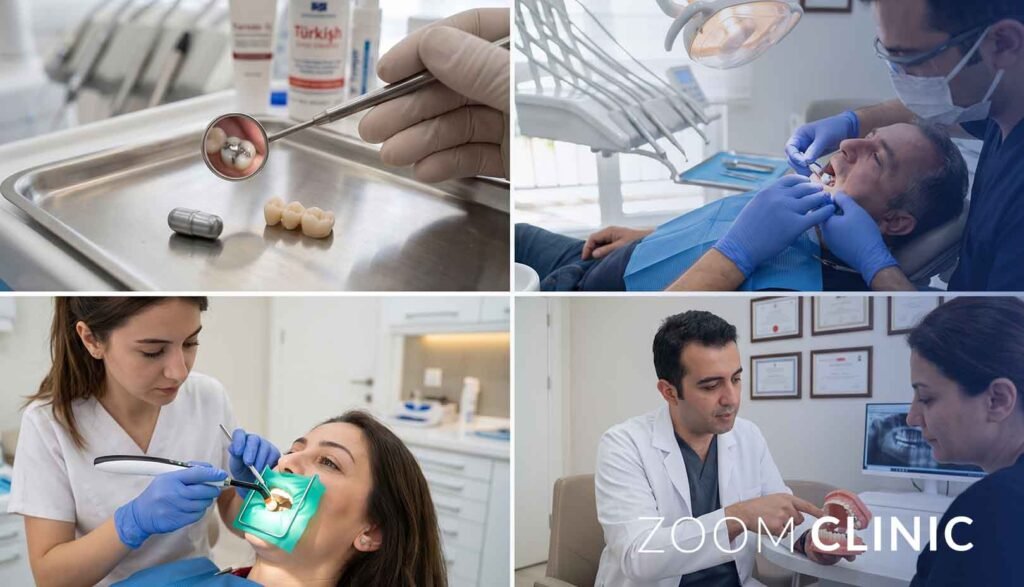
The dental treatment journey in Turkey typically begins with a complimentary online consultation, during which the patient submits clinical photographs and receives a preliminary assessment alongside a cost estimate.
Upon arrival, a comprehensive clinical examination is conducted, including any necessary radiographic imaging. Direct fillings are completed on the same day, while indirect ceramic restorations require two to three days.
Being in Turkey also affords the opportunity to complement the treatment with tourism in Istanbul, Antalya, or other historically rich cities. You may explore available medical tourism packages to learn how to organize your trip in its entirety.
Practical Tips Before Traveling to Turkey for Dental Fillings
Ceramic Fillings vs. Amalgam (Silver) Fillings
Thorough preparation prior to travel saves time and effort, and ensures a smooth clinical experience.
How to Select the Right Clinic
When researching dental clinics in Turkey, focus on the following criteria:
- International accreditation: Look for JCI certification or other recognized international credentials
- Clinician expertise: Verify the practitioner’s years of specialization in cosmetic and restorative dentistry
- Available technology: Clinics equipped with CAD/CAM systems and three-dimensional digital imaging offer greater precision
- Independent patient reviews: Consult ratings on independent platforms, not solely the clinic’s own website
- Pricing transparency: Insist on a detailed written cost estimate before agreeing to any treatment plan
What to Bring and What to Expect Upon Arrival
Prior to travel, compile clear photographs of your dentition and any existing radiographs if available, along with a list of current medications and any relevant medical history. Upon arrival at the clinic, a thorough clinical examination will be carried out before any treatment proceeds.
Expect the first appointment to be primarily diagnostic, with the clinician determining the most appropriate treatment option based on your individual clinical presentation. Most major Turkish dental clinics provide an Arabic-speaking interpreter or patient coordinator to facilitate communication.
Frequently Asked Questions About Ceramic and Amalgam Fillings in Turkey
Are Ceramic Fillings Better Than Amalgam in Turkey?
This depends on your individual needs. Ceramic fillings are aesthetically superior, closely mimicking natural tooth color, and represent the optimal choice for anterior teeth. Amalgam, while more resilient and less costly, is declining in usage. Your clinician will guide you in identifying the most appropriate option based on your clinical condition and the location of the affected tooth.
How Do Ceramic Filling Costs in Turkey Compare to Europe?
In Turkey, ceramic fillings are priced between €150 and €320 depending on the material and the clinic, whereas comparable restorations in European countries can cost €600 or more. This price differential makes Turkey an attractive dental tourism destination, particularly given the quality of care offered in its internationally accredited facilities.
Are Amalgam Fillings Safe to Use in Turkey?
Amalgam fillings contain a proportion of mercury, and the European Union has restricted their use in most clinical contexts beginning in 2025. In Turkey, their use in specific cases remains legally permissible, though the general trend in contemporary clinics is firmly oriented toward ceramic or composite restorations as safer and more aesthetically favorable alternatives.
Will I Need Multiple Appointments for Ceramic Fillings in Turkey?
The number of appointments depends on the type of ceramic restoration. Direct fillings are completed in a single session, whereas indirect restorations such as inlays and onlays require two appointments, one for preparation and impression-taking, and a second for final placement following laboratory fabrication. It is advisable to plan your treatment trip with sufficient time to accommodate this schedule.
What Factors Influence the Cost of Ceramic Versus Amalgam Fillings in Turkey?
The cost is influenced by several factors, including the restorative material selected (porcelain, zirconia, or composite resin), the location and extent of the carious lesion, the clinician’s expertise, and the clinic’s technical infrastructure. Ceramic restorations are inherently more costly, yet they offer a longer service life and superior aesthetic outcomes, ultimately reducing the need for retreatment in the future.
Conclusion
The choice between ceramic and amalgam dental fillings in Turkey is not purely a clinical decision, it is one that integrates considerations of health, aesthetics, and economics. While amalgam has served restorative dentistry for many decades, both global and Turkish trends are advancing steadily toward ceramic restorations, which simultaneously deliver beauty, biocompatibility, and longevity.
Turkey remains the most intelligent choice for patients seeking this quality of care at a cost they cannot find at home. Begin with a digital consultation, plan your trip, and book your appointment, toward a healthier, more confident smile.
other articles How Long Do Veneers Last in Turkey? The Complete Truth About Lifespan
How Long Do Veneers Last in Turkey? The Complete Truth About Lifespan
Get the special offer today from Zoom Clinic