

Have you ever thought about getting a rhinoplasty, only to find yourself surrounded by results that look nothing like your features? This isn’t a coincidence, it’s the very real consequence of a fundamental difference that many people overlook: the Arabic nose is not a lesser version of the Western nose. It is an entirely different structure that deserves an entirely different approach to rhinoplasty.
Arabic nose rhinoplasty is one of the most sought-after cosmetic procedures in the Arab world, yet reliable information about it remains scarce in Arabic, and even in English when it comes to the patient’s perspective. Many patients enter the operating room with expectations shaped by European or Hollywood noses, only to discover afterward that their results look artificial or mismatched with their facial features. The reason is straightforward: Arabic nose rhinoplasty differs fundamentally from Western nose rhinoplasty, anatomically, technically, and aesthetically.
In this article, you will find a comprehensive and well-researched answer to everything you need to know before making your decision.
content
What Makes the Arabic Nose Anatomically Unique?
To understand the real difference between the Arabic and Western nose, we must first understand what makes the Arabic nose anatomically distinctive. This understanding is precisely what determines the appropriate surgical approach and the nature of expected outcomes.
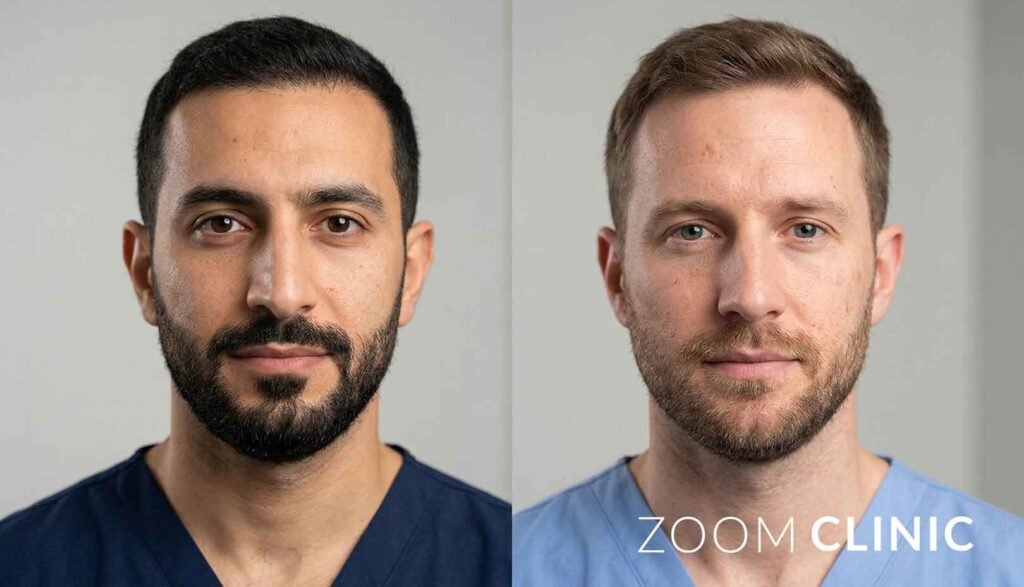
Skin Thickness and Cartilage in the Arabic Nose
The most prominent characteristic of the Arabic nose is thick skin. The skin covering the nose is noticeably thicker than that of a Western nose, particularly at the tip. This thickness results from a higher density of subcutaneous fatty tissue, which limits the surgeon’s ability to project fine cartilage details through the skin to the outside.
As for the lower lateral cartilages, which form the nasal tip, they tend to be less rigid and weaker in structural support in the Arabic nose compared to their counterparts in the Western nose. This leads to what is commonly known as an “undefined” or rounded tip, a concern shared by many patients.
Projection, Length, and Width, The Most Common Characteristics
The Arabic nose is known for several shared traits, though they vary from person to person:
- Excessive projection of the nasal bridge, commonly known as a dorsal hump
- An elongated tip with a tendency to droop, especially when smiling or speaking
- A relatively wide nasal base (nostrils)
- Lack of tip definition due to thick skin
These characteristics are not necessarily flaws, they are authentic ethnic features. However, when they cause functional or aesthetic discomfort, surgical intervention becomes a considered option.
The Diversity of the Arabic Nose by Geographic Region
What many people overlook is that the “Arabic nose” is not a single, uniform type. There is clear variation depending on geographic region:
- The Gulf nose: Typically characterized by thicker skin and a more rounded tip, with a tendency toward projection
- The Levantine nose (Syrian, Lebanese, Palestinian): Closer to the Mediterranean type, relatively thinner skin, sometimes with a pronounced dorsal hump
- The Maghrebi nose: Sometimes combines Arab and Amazigh features, with a relatively wider base and a distinctive tip
This diversity makes Arabic rhinoplasty a deeply personal experience, not a one-size-fits-all template.
The Difference Between the Arabic Nose and the Western Nose
Now we arrive at the heart of the comparison. When we place the Arabic nose and the Western (Caucasian or European) nose side by side, genuine structural differences emerge that go far beyond surface appearance.
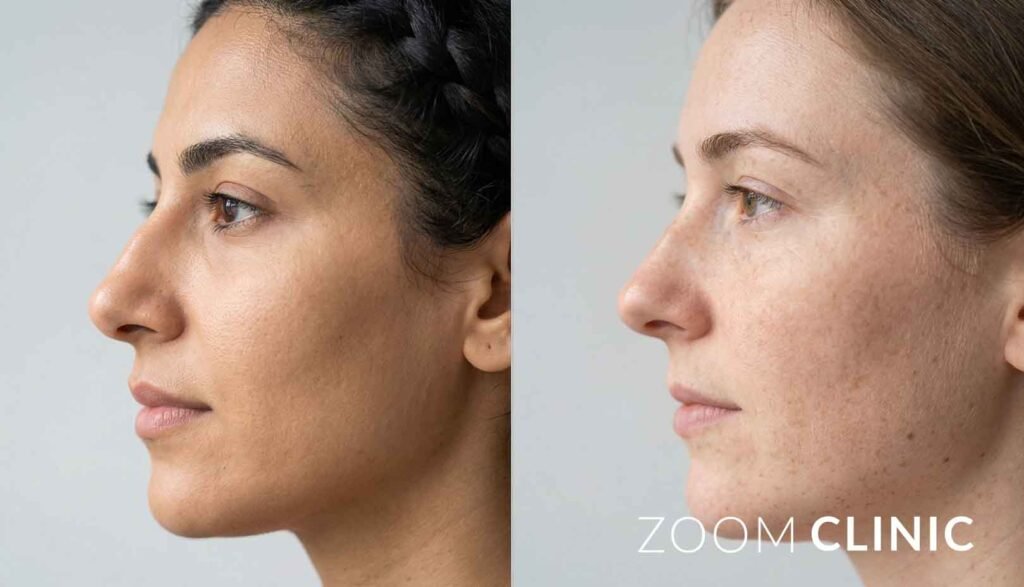
Differences in Skin Structure and Fatty Tissue
In the Western nose, the skin is relatively thin and translucent, meaning that any improvement to the internal cartilaginous framework will be clearly reflected in the external shape. In other words: a small surgical change produces a significant visual result.
By contrast, the thick skin of the Arabic nose acts as a “curtain” that dampens the effect of internal changes. For this reason, a specialist surgeon must build a considerably stronger internal framework to achieve the desired visible outcome. Sometimes, the surgeon carefully reduces the thickness of the subcutaneous tissue at the tip to allow better definition.
Differences in the Nasal Bridge Shape and Tip Angle
The nasal dorsum, the upper bony portion of the nose, in the Western nose tends to be sharper and more elevated, and the angle between the nose and upper lip (the nasolabial angle) more naturally falls within an ideal range.
In the Arabic nose, a dorsal hump is a common concern, and the nasolabial angle is typically smaller than ideal, meaning the tip tends to point downward, particularly in cases where drooping occurs during smiling.
Differences in the Lower Cartilages and Nasal Support Strength
The lower lateral cartilages that form the nasal tip in the Western nose tend to be stronger and more symmetrical, allowing the surgeon to reshape them directly.
In the Arabic nose, these cartilages are weaker and offer less support, which requires the surgeon to use cartilage grafts, typically harvested from the nasal septum or ear, to reinforce the internal structure before any tip shaping can be considered.
Differences in Cultural Beauty Standards
This point is critically important and frequently overlooked. Beauty standards are not universal. A beautiful nose in the Western cultural framework may be defined by extreme delicacy, an upturned tip, and a lowered bridge. But when these standards are applied literally to an Arab face with strong, prominent features, the result is jarring and disproportionate.
Arab beauty has its own frame of reference. A successfully refined Arabic nose is one that improves overall facial harmony, complementing the eyes, jaw, and forehead, without looking “transplanted” from another world onto the face.
Why Does Arabic Nose Rhinoplasty Differ from Western Rhinoplasty?
The anatomical difference inevitably leads to a difference in surgical technique. This is what every patient must understand before choosing their surgeon.
The Challenges of Thick Skin and Its Impact on Results
Thick skin in Arabic nose rhinoplasty means one practical thing: results appear more slowly, and fine details are harder to achieve. A surgeon may spend an hour building a perfect nasal tip internally, but if the cartilaginous framework isn’t strong enough to “push through” the thick skin from the inside, the desired definition simply won’t show.
For this reason, surgeons specializing in Arabic noses use techniques such as the Shield Graft, a cartilage graft fixed at the nasal tip to provide the definition and projection needed despite the thickness of the skin.
Techniques for Reinforcing the Internal Cartilaginous Framework
In Western rhinoplasty, it is often possible to simply reshape and redistribute existing cartilage. In Arabic nose rhinoplasty, however, the surgeon typically requires:
- Strut Grafts to strengthen the columellar support
- Extension Grafts to elevate a drooping tip
- Spreader Grafts to preserve breathing function and improve the bridge shape
This means that Arabic nose rhinoplasty is largely a process of construction, not merely reduction, and that demands a surgeon with specific expertise in this type of nose.
The Risks of “Over-Westernization” and How the Specialist Surgeon Avoids It
The real danger that some patients fall into is what specialist surgeons call “over-westernization”, the attempt to transform an Arabic nose into a fully Western one. The results in these cases are often distressing: a nose that appears disconnected from the rest of the face, a tip lifted to an exaggerated and artificial degree, or a bridge lowered so much it no longer harmonizes with the depth of an Arab face.
The successful Arabic rhinoplasty surgeon is one who works with the facial structure, not against it, crafting beauty standards tailored to each individual patient rather than copying from aesthetic models that have no connection to their features.
Preserving Arab Identity in Rhinoplasty
There is a question that weighs on many patients before undergoing Arabic nose rhinoplasty: Will I still look like myself after the procedure? The honest answer is: yes, if you choose the right surgeon and set the right goal.

Can You Achieve a Beautiful Nose Without Losing Your Arabic Features?
Absolutely. This is confirmed by dozens of successful cases in the field of ethnic rhinoplasty. The goal of the procedure is not to “erase” identity, but to improve overall facial harmony. The excessive dorsal projection can be reduced while maintaining a natural height that suits the face. The tip can be defined without being raised to an exaggerated degree. The base can be narrowed slightly without the nose losing its belonging to your features.
Success lies in the balance between what you want to change and what should remain.
Realistic Beauty Standards for the Refined Arabic Nose
It is essential for the patient to enter the surgeon’s room with expectations grounded in their own reality, not in photographs of others. A successfully refined Arabic nose:
- Looks proportionate to the size and depth of the face
- Preserves or improves breathing function
- Does not appear artificial in photos or in person
- Remains stable and consistent as the years pass
The Importance of Consulting a Surgeon Specializing in Arabic Noses
Not every plastic surgeon is a specialist in Arabic noses. When choosing your surgeon, look for:
- Documented experience specifically in ethnic rhinoplasty
- A case gallery featuring Arabic noses, before and after
- A surgeon who listens to your expectations and honestly explains what is achievable
- A clinic that offers 3D imaging and simulation technology to estimate results in advance
Before Making Your Decision, What You Need to Know About Arabic Nose Rhinoplasty
The Initial Diagnostic Evaluation to Identify Your Nose Type
Before any procedure, an experienced surgeon begins with a precise structural diagnosis of the nose: assessing skin thickness, cartilage strength and flexibility, the nature of the bridge (bony or cartilaginous), and the tip angle. This is complemented by an analysis of how the nose relates to the rest of the facial features, the inter-eye distance, chin projection, and lip volume. This diagnosis is what determines the optimal surgical plan for each individual case.
Realistic Expectations for the Recovery Phase and Final Results
Recovery from Arabic nose rhinoplasty progresses through sequential stages:
- Week one: Visible swelling, external splint, complete rest
- Weeks two through four: Noticeable reduction in swelling, resumption of light daily activity
- Months two through six: Results begin to emerge gradually as swelling continues to subside
- Months six through twelve: Complete final result
The Arabic nose, with its thicker skin, generally requires more time to reach the final outcome compared to a Western nose, and this is entirely normal, something the patient should be prepared for.
Frequently Asked Questions About Arabic Nose Rhinoplasty
Does Arabic nose rhinoplasty truly differ from Western rhinoplasty?
Yes, it differs fundamentally. The Arabic nose is characterized by thicker skin and weaker cartilage, which requires entirely different surgical techniques aimed at reinforcing the internal framework, rather than simply removing tissue as is often done with the thinner-skinned Western nose.
Will my nose look unnatural after the procedure?
No, provided the procedure is performed by a surgeon who specializes in Arabic noses. The primary goal is to improve harmony with your facial features while preserving your authentic Arab character, far from the exaggerated results that could strip you of your identity and leave your outcome looking artificial.
What are the most common concerns addressed by Arabic nose rhinoplasty?
Arabic nose rhinoplasty most commonly addresses excessive projection, an elongated drooping tip, a wide nasal base, and a dorsal hump. It also addresses an undefined tip resulting from thick skin, all while carefully preserving the patient’s authentic ethnic features.
How long does it take for the results of Arabic nose rhinoplasty to fully appear?
Initial results become visible within a few weeks after the main swelling subsides, but the final outcome typically takes between 6 and 12 months to fully emerge. This is due to the thicker skin of the Arabic nose, which needs more time to adapt to its new shape compared to Western noses.
Does Arabic nose rhinoplasty differ between men and women?
Yes, there are clear distinctions. Arab women typically seek a more refined tip and a more elegant overall appearance, while Arab men generally prefer to preserve a degree of projection that lends the face strength and masculinity. As a result, the surgical plan is designed differently for each gender.
Conclusion
Arabic nose rhinoplasty is not merely a surgical procedure, it is a decision that deserves careful thought and accurate information. The difference between the Arabic nose and the Western nose is not a difference in the degree of beauty, but in structure, characteristics, and aesthetic standards. Understanding this difference is the very first step toward a natural result that honors your features and expresses your identity.
If you are considering Arabic nose rhinoplasty, begin with a specialized consultation with a surgeon who genuinely understands the structure of the Arabic nose, and who places a harmonious, face-appropriate result above any imported beauty ideal.
read also
10 Mistakes to Avoid in Rhinoplasty
Turbinate Hypertrophy: Treatment Combined with Aesthetic Improvement in One Session
Get the special offer today from Zoom Clinic