
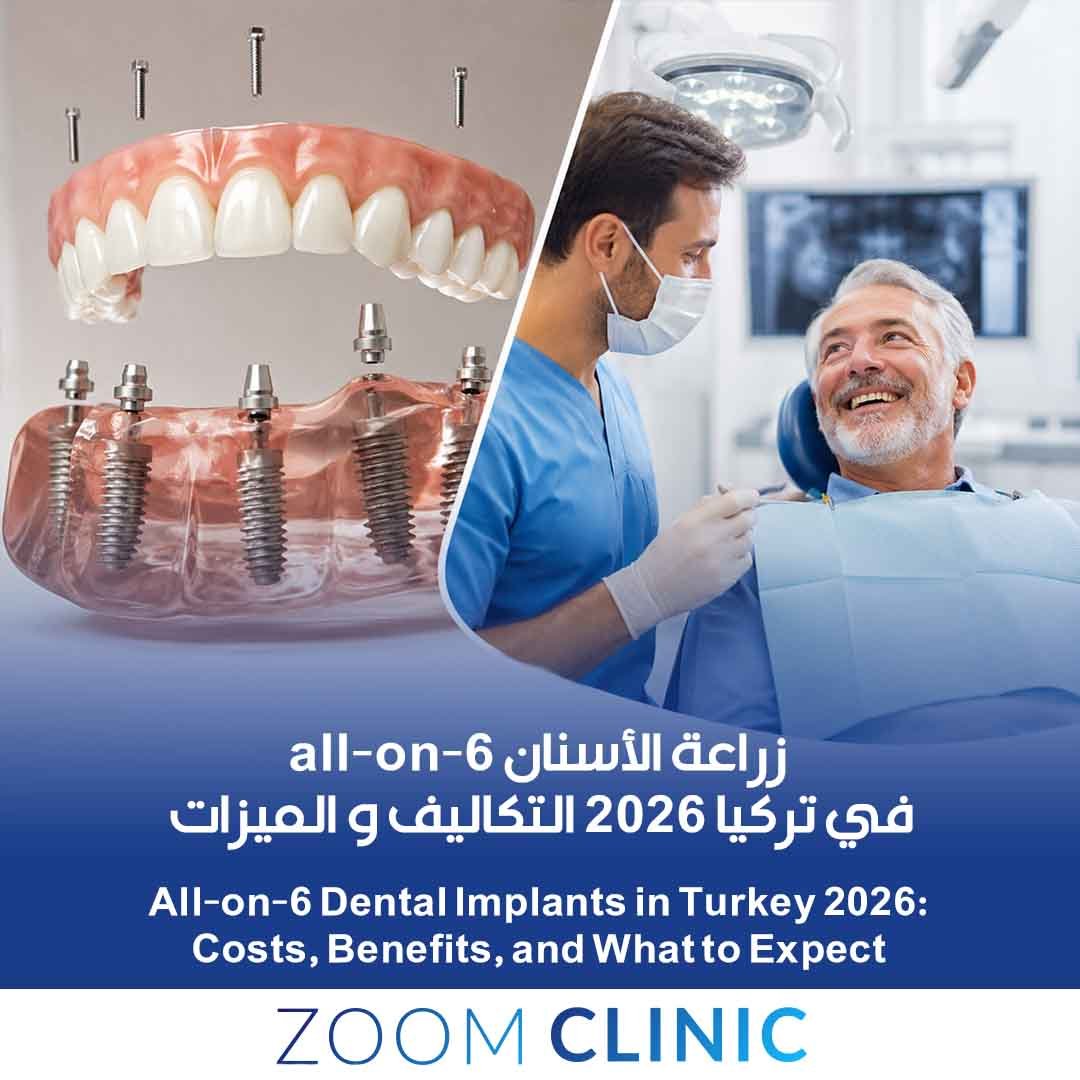
Losing all your teeth is not just an aesthetic problem, it affects how you eat, how you speak, and how you feel about yourself every single day. While the cost of a permanent solution in Europe or America reaches staggering figures, Turkey now offers the same treatment at international medical standards for a fraction of the price.
The All-on-6 technique is today one of the most stable and reliable full-arch dental solutions in the world. For those who want to understand the full spectrum of implant options before making a decision, our comprehensive guide to dental implant types and procedures is a great starting point.
In this article you will find everything you need to know: real costs, step-by-step treatment stages, medical eligibility criteria, and scientifically documented success rates.
Content
What Are All-on-6 Dental Implants and How Do They Work?
The Science Behind All-on-6
This technique involves placing six titanium implants in the jawbone, working together as a solid foundation to support 12 fixed artificial teeth in the form of a complete, non-removable bridge.
The implants are positioned at precisely calculated angles, planned digitally in advance, to exploit the densest areas of the jawbone. This strategic placement significantly reduces the need for bone augmentation procedures in many cases.
According to a study published in PMC (NCBI) in 2024 on full-arch rehabilitation using the All-on-6 concept, distributing load across six anchor points reduces mechanical stress on the surrounding bone and improves both clinical and radiological outcomes compared to systems using fewer implants.
The end result: fixed teeth that look and function like natural ones, they don’t come out, they don’t shift, and they require no adhesive or special cleaning solution.
All-on-6 vs All-on-4, The Difference That Matters
Many patients ask: what makes All-on-6 better if All-on-4 is cheaper? The answer lies in the simple physics of load distribution across the jawbone.
| Criterion | All-on-4 | All-on-6 |
| Number of implants | 4 | 6 |
| Load distribution | Concentrated on 4 points | Spread across 6 points |
| Bone requirements | Suitable for significant bone loss | Requires reasonable bone density |
| Long-term stability | Very good | Higher and more consistent |
| Need for titanium bar | In some cases | Rarely |
| Approximate cost | 20–35% lower | Higher |
The bottom line: if your bone density is good, All-on-6 gives you longer-lasting stability and performance closer to natural teeth. If you suffer from severe bone loss, All-on-4 may be the more suitable option, you can find out which one fits your case through our cosmetic dental services page at Zoom Clinic.
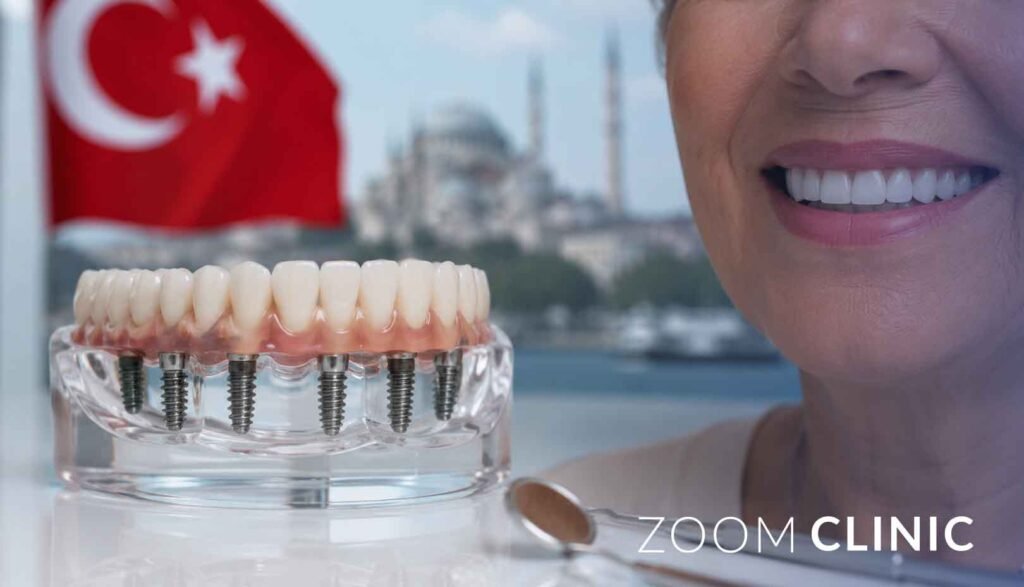
All-on-6 Dental Implants
All-on-6 Costs in Turkey 2026, The Real Numbers
Average Cost by Material Type
All-on-6 costs in Turkey range between $3,500 and $12,000 per arch, varying according to the material used for the final crown:
| Material | Price Range (per arch) | Advantages |
| Acrylic | $3,500 – $5,000 | Economical, lightweight, suitable as temporary crown |
| Porcelain | $5,000 – $8,000 | Natural appearance, good durability |
| Zirconia | $7,000 – $12,000 | Strongest and most aesthetic, longest lifespan |
These figures reflect data recorded by Bookimed in April 2026, based on actual invoices from hundreds of accredited Turkish clinics. Zirconia is the most popular choice among patients from the Arab Gulf countries, combining durability and aesthetics in one.
What Does an All-Inclusive Package in Turkey Cover?
The major advantage of medical tourism in Turkey is the “all-inclusive package” model that eliminates surprise bills. A quality package typically includes:
- Six titanium implants and abutment connectors
- 3D CBCT imaging and digital planning before the procedure
- Temporary crown during the first visit so the patient can eat immediately
- Permanent crown (zirconia or porcelain) at the second visit
- Airport transfers throughout the entire stay
- Hotel accommodation at a 4 or 5-star hotel near the clinic
- Medical consultation before the procedure and follow-up sessions
Important note: some packages cover only the first visit and exclude the permanent crown. Always confirm the package covers both visits in full before booking. To enquire about available package details, contact the Zoom Clinic team directly via WhatsApp.
Cost Comparison With Other Countries
| Country | Average Cost (per arch) | Savings vs USA |
| Turkey | $3,500 – $12,000 | Up to 75% |
| Saudi Arabia | $15,000 – $25,000 | 40–50% |
| United Arab Emirates | $18,000 – $30,000 | 30–40% |
| United Kingdom | $20,000 – $40,000 | 20–30% |
| Germany | $20,000 – $35,000 | 25–35% |
| United States | $25,000 – $50,000 | — |
This enormous price gap, while maintaining international medical standards, is precisely what makes Turkey the world’s leading destination for dental medical tourism.
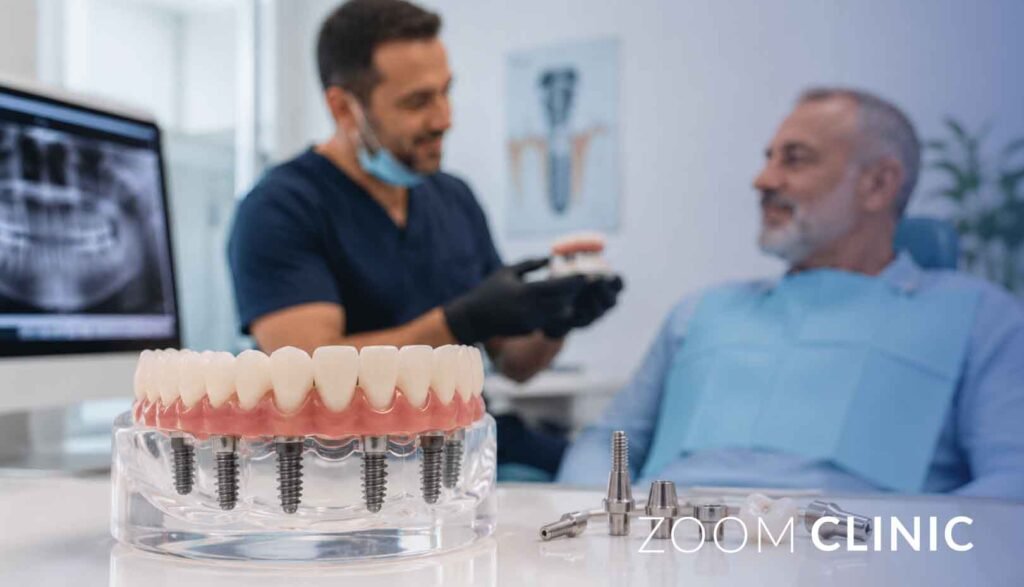
All-on-6 Dental Implants
Who Is the Ideal Candidate for All-on-6?
Medical Requirements
Before any discussion of appointments or costs, the most important question is: are you a suitable candidate for this procedure? The basic requirements are:
- Sufficient bone density in the jaw, measured by 3D CBCT imaging before any decision
- Gums free of active disease such as advanced periodontitis
- Stable general health: blood pressure, diabetes, cardiac function
- Patient age 18 years or older for completed jaw development, for more on the relationship between age and implants, read our dedicated article: Dental Implants and Age
According to research published in PubMed (PMC11759002) in 2025 on implant success rates in diabetic patients, these patients can safely undergo the procedure when HbA1c levels are controlled below 8%, with survival rates reaching 96.1% – 97.3% one year after placement.
Cases That Require Additional Evaluation
These conditions don’t mean the procedure is impossible, but they do require deeper assessment:
- Heavy smoking: reduces blood supply to bone and raises the risk of early implant failure
- Unstable autoimmune disorders or those treated with high-dose corticosteroids
- Severely compromised bone in certain areas, which may require bone augmentation first
- Unstable cardiovascular conditions that may require modification of the surgical protocol
In all cases, the first step is a CBCT scan reviewed by a specialist. Contact us via WhatsApp to send your scan and receive a free preliminary assessment.
Treatment Stages in Turkey, From Arrival to Your Final Smile
First Visit (5 – 7 Days)
Day 1: Arrival in Turkey, airport reception, 3D CBCT imaging, and a detailed consultation with the specialist to discuss the treatment plan and crown materials.
Day 2–3: Surgical procedure under local or general anaesthesia according to the patient’s preference, placement of the six implants and fitting of the temporary crown in the same session, so the patient can eat and speak normally before leaving the clinic.
Day 4–6: Rest and daily follow-up, medical review to confirm the early healing is progressing well. To understand what to expect during this phase, read our guide to dental implant recovery time for international patients.
Day 7: Final review, receipt of the implant documentation, then departure.
Second Visit (3 – 6 Months Later)
This visit lasts between 3 and 5 days and is the most critical stage:
- Assessment of implant integration with the bone (Osseointegration) to confirm complete success
- Precise digital measurements to design the permanent crown using CAD/CAM technology
- Fitting of the permanent zirconia crown and final aesthetic and functional fine-tuning
- Receipt of the official written warranty document
After this visit, you leave with a complete, permanent smile, which is exactly what patients describe when they return home.
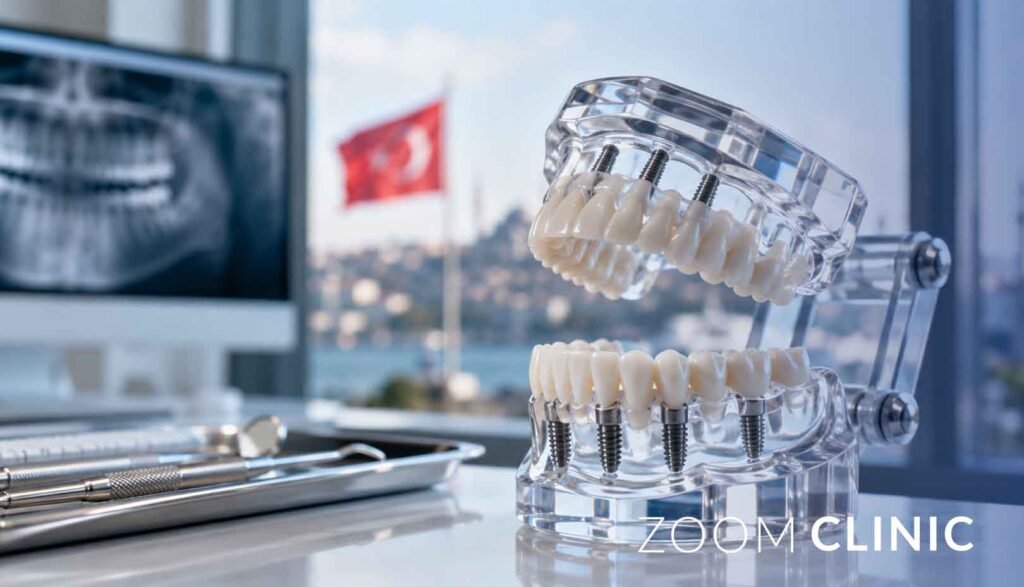
All-on-6 Dental Implants
Success Rates and Warranties, What the Science Says
Dental implants are among the most successful elective medical procedures in the world, and this is not a marketing claim but a scientifically documented fact.
According to a meta-analysis published in Clinical Oral Investigations (Springer Nature) in 2024, covering twenty years of data across hundreds of studies, titanium implant survival rates range between 88% and 92% over two full decades. That is an exceptional rate for any medical procedure spanning that length of time.
A comprehensive review published in the Journal of the American Dental Association (JADA) also noted that systematic meta-analyses of implant studies record success rates exceeding 95% in the first three to five years under optimal conditions. We explore these figures in detail in a dedicated article, read: The Success Rate of Dental Implants: What You Need to Know.
What extends implant lifespan?
- Quality of digital planning and precision in implant positioning before the procedure
- Full osseointegration of the implant with bone before loading with the permanent crown
- Commitment to annual follow-up appointments and professional cleaning
- Quitting smoking during the healing period and beyond
- Avoiding extremely hard foods in the first months after placement
A good warranty typically covers implants for 10–15 years and zirconia crowns for 5–10 years. Always ensure the warranty is written and documented, not just a verbal promise.
All-on-6 Dental Implants
Why Turkey Specifically for All-on-6?
Medical Infrastructure and International Accreditations
Turkey is home to clinics holding international accreditations from bodies such as JCI, AACCI, and ISO 9001, the same standards applied in leading European hospitals.
The number of international patients travelling to Turkey for medical treatment exceeds 1.2 million annually. This enormous case volume means Turkish surgeons accumulate exceptional hands-on expertise that is simply unavailable in many other countries.
Technology: 3D Digital Planning and CAD/CAM
Advanced clinics in Turkey operate an integrated digital chain from imaging all the way to the final crown:
- 3D CBCT imaging that maps the jawbone, nerves, and blood vessels with precision
- Digital surgical planning software that determines each implant’s exact position to the millimetre before entering the operating room
- CAD/CAM crown fabrication that eliminates manual errors and produces a crown matching the measurements exactly
This technology raises the precision of aesthetic and functional outcomes and significantly reduces session time, meaning greater comfort for the patient and faster recovery.
The Experience of Arab Patients in Turkey
Turkey has received millions of Arab patients over recent years. Specialist clinics now offer a fully tailored service ecosystem for Arab patients, including:
- Complete trip coordination from the very first contact until the return home
- Arabic-language support throughout the entire journey, before arrival, during the stay, and after returning
- Remote follow-up via WhatsApp and digital platforms to answer recovery questions and monitor healing progress
- Flexibility in scheduling both visits to accommodate the patient’s personal and professional circumstances
To see the full range of services available to medical tourism patients from Arab countries, visit the cosmetic dental services page at Zoom Clinic.
Frequently Asked Questions About All-on-6 in Turkey
What is the main difference between All-on-6 and All-on-4?
All-on-6 uses six implants instead of four, distributing load more evenly across the bone and providing greater stability for the fixed prosthesis. It is the ideal choice for patients with good bone density who want longer-lasting durability, while All-on-4 remains a suitable option for cases of severe bone loss.
Does the all-inclusive package cover accommodation and transfers?
In most cases, yes. All-inclusive packages in Turkey typically cover the implants, crowns, consultation, 3D imaging, and temporary crown, as well as airport transfer services and hotel accommodation. It is advisable to verify package details carefully before booking to confirm all treatment stages are included.
Can patients with diabetes undergo All-on-6?
Yes, diabetic patients can safely undergo the procedure when blood sugar levels are controlled (HbA1c below 8%). Research published in PubMed databases demonstrates survival rates between 96% and 97% in this patient group. A thorough pre-operative medical evaluation is, however, an essential prerequisite for determining eligibility and ensuring procedural safety.
How many days do I need to spend in Turkey for All-on-6?
The procedure typically requires two visits: the first lasting five to seven days for implant placement and temporary crown fitting, and the second three to six months later to receive the permanent crown. Prior coordination can ensure the shortest possible stay while achieving the optimal outcome.
Is All-on-6 dental implant surgery in Turkey safe?
Turkey is home to clinics holding internationally recognised accreditations and operating under strict sterilisation and digital planning protocols. Studies published in peer-reviewed scientific journals show implant success rates exceeding 90% over a twenty-year period, making the procedure reliable and effective when the right medical facility is chosen.
Conclusion
All-on-6 dental implants in Turkey in 2026 are no longer merely an economical choice, they represent a complete medical solution combining advanced digital technology, surgical expertise, and prices that save you between 60% and 75% compared to the Gulf countries and Europe.
The right decision always starts with an accurate medical evaluation, not the price tag. The first step is sending your scan and receiving a specialist’s opinion.
Contact the Zoom Clinic team now via WhatsApp and get your free consultation
Get the special offer today from Zoom Clinic
Scientific References
- Morachini et al., Clinical Oral Investigations, Springer Nature, 2024: Meta-analysis of dental implant survival rates over 20 years [PMC11416373]
- Journal of the American Dental Association (JADA), 2014: Outcomes of implants in general dental practices, success rates exceeding 95%
- PMC10852098, Prosthetic Rehabilitation of All-on-Six Implant-Supported Prosthesis, NCBI 2024
- PMC11759002, Success Rates of Dental Implants in Patients with Diabetes, NCBI 2025: HbA1c <8% yields survival rates of 96–97%
- American Academy of Implant Dentistry (AAID), Implant success evaluation criteria