
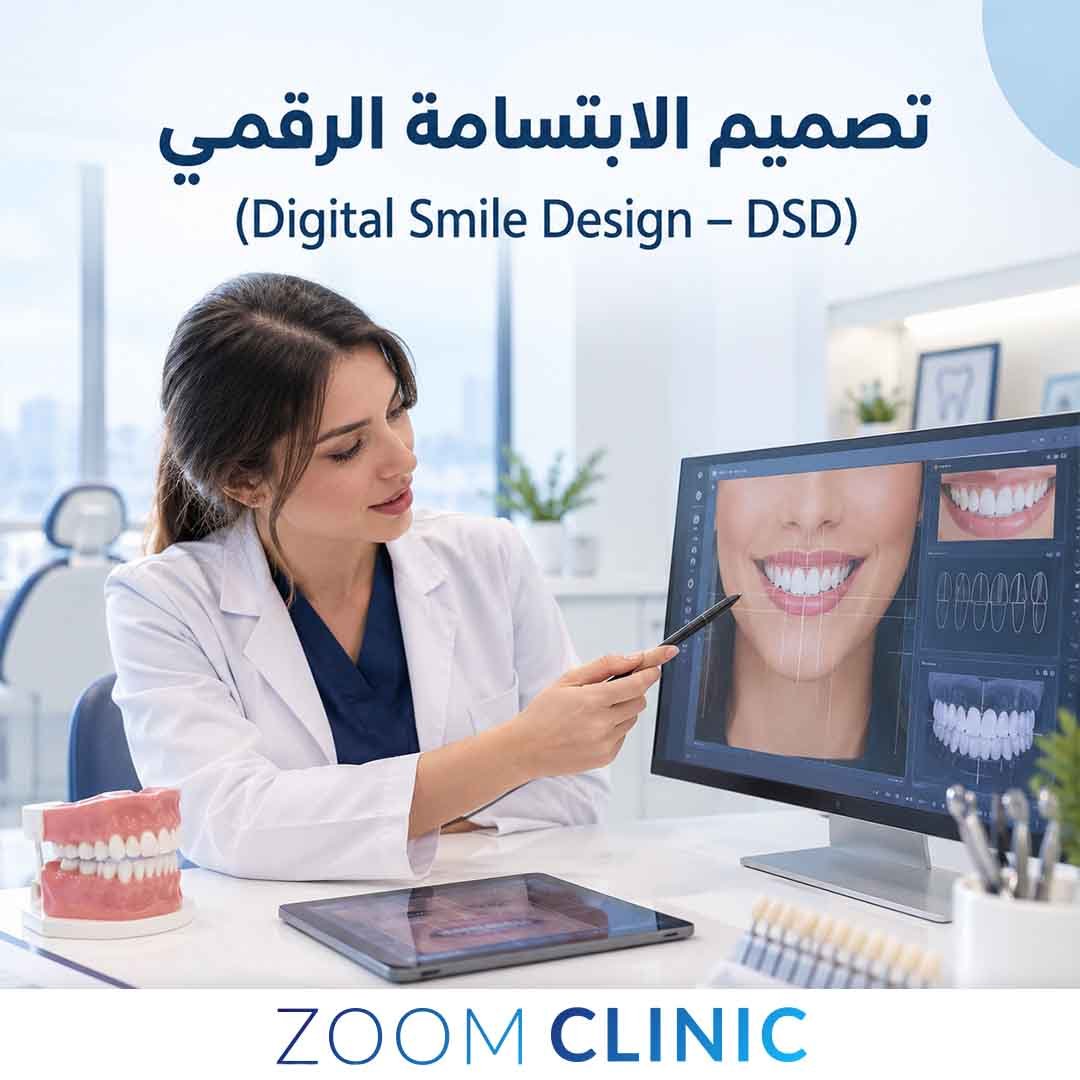
Digital Smile Design (DSD) is a digital protocol dentists use to analyze facial features and smile proportions, then show a visual simulation of the expected outcome before any actual treatment begins.
DSD is used as a planning step that precedes treatments such as veneers, orthodontics, or whitening, it is not a treatment in itself, and it does not correct functional jaw or bite problems on its own. In this guide, we explain how digital smile design works, its detailed steps, and who is a suitable candidate for it, along with the realistic limitations you should know before booking with the cosmetic dentistry team at Zoom Clinic.
Content
What Is Digital Smile Design (DSD)?
Digital Smile Design is a digital planning method that relies on photographs, video, and 3D scanning to analyze facial and dental proportions, with the goal of designing a visual simulation of the targeted smile before carrying out any cosmetic procedure.
The protocol combines precise measurements of the smile line, tooth proportions, and facial harmony to produce a digital map that the dentist and the lab use together to plan treatment.
The general principle relies on photographing the patient from specific angles, then projecting a proposed design onto these photos using specialized software, so the patient sees an approximate version of their future smile before any intervention, opening the door to discussion and adjustment before committing to treatment.
This kind of visual planning has become a common standard in cosmetic dentistry clinics worldwide, in line with the predictable-esthetics principles the American Academy of Cosmetic Dentistry (AACD) publishes on smile design planning[1].
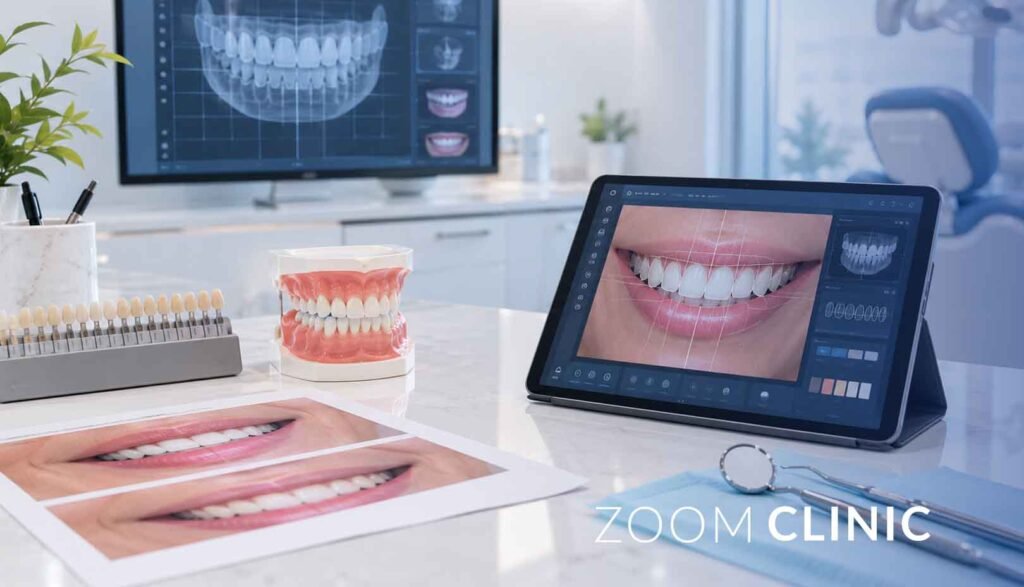
How Does Digital Smile Design Differ from Traditional Manual Simulation?
The core difference lies in accuracy and speed. Traditional manual simulation relies on drawings or wax models (wax-ups) made by hand in the lab, a slower process that’s less open to immediate adjustment. Digital smile design, on the other hand, uses digital software that allows shape, size, and color to be adjusted in the same session, which shortens preparation time and makes communication between dentist and patient easier.
Even so, this advantage doesn’t mean the digital tool is necessarily more accurate than every detail of the clinical situation, the dentist’s direct assessment of the teeth and mouth remains the primary reference in any case.
Is Digital Smile Design a Treatment or a Planning Tool?
Digital smile design is a planning and visual communication tool, not a treatment in itself. It does not correct functional problems such as bite misalignment or temporomandibular joint issues, and it does not replace the full clinical examination that includes assessing gum health, tooth condition, and supporting bone.
Its purpose is to help the patient picture the potential outcome, while the final medical decision about the type of treatment and its suitability for each patient’s case remains with the treating dentist after a direct examination.
How Does the Digital Smile Design Process Work?
The digital smile design process moves through three main, sequential stages, starting with initial assessment and ending with the patient’s approval of the final design before any treatment begins.
Consultation and Facial Feature Analysis
The session begins with a consultation in which the dentist listens to the patient’s aesthetic goals, then photographs the face and smile from multiple angles while the patient speaks and smiles naturally, not just in a fixed pose.
At this stage, the dentist analyzes the smile line, lip alignment, and facial midline, because this data forms the reference framework any subsequent design will be built on.
This initial analysis is essential, since any tooth design considered separately from facial features may look unbalanced in reality, no matter how precise the individual tooth measurements are on their own.
3D Digital Scan of the Teeth and Jaws
After the initial analysis, a 3D digital scan is taken inside the mouth to capture precise details of tooth shape, the jaws, and the relationship between them. In many clinics, this scan replaces uncomfortable traditional impressions and produces an accurate digital model later used to design the proposed veneers, crown, or restoration.
This digital data can also be merged with the facial photographs in a single program for an integrated view that brings both the functional and aesthetic sides together.
Simulation Preview and Design Approval Before Treatment
At this stage, the patient is shown a preliminary smile design built from the photographs and the digital scan, with the option to discuss desired adjustments to shape, length, or harmony. This simulation represents an approximate expectation of the outcome, not an exact replica of the final result, since clinical factors during the actual procedure can introduce slight differences.
Once the patient approves the general design, detailed planning for the actual, suitable treatment begins, coordinated between the dentist and the lab responsible for fabricating the final pieces.
Which Treatments Can Be Planned Using Digital Smile Design?
Digital smile design is used as a preparatory step ahead of several cosmetic dental treatments, most notably:
- Veneers: DSD helps determine the appropriate shape, length, and color for veneers before the teeth are prepared, giving both patient and dentist a clearer picture of the target outcome. You can check the cost of veneers in Turkey 2026 to see price ranges by material type.
- Teeth whitening: The targeted shade simulation can be integrated into the overall smile design, especially when whitening is planned alongside another procedure.
- Orthodontics: Digital analysis is used to show how the smile will look after alignment correction, helping set orthodontic goals more precisely from the start.
- Dental implants: In cases of missing front teeth, DSD helps visualize the final aesthetic shape of the restoration before surgical planning.
In all cases, determining the actual suitable treatment remains dependent on the treating dentist’s assessment after a full examination of each individual case, apart from any preliminary digital simulation.
Who Is a Good Candidate for Digital Smile Design?
Digital smile design is generally suitable for anyone who:
- Is considering one or more cosmetic procedures on the front teeth and wants to see the expected outcome before committing.
- Has questions or hesitation about the desired shape, size, or color of the teeth, and needs a visual communication tool with their dentist.
- Is planning a combined cosmetic treatment involving more than one procedure (such as veneers with whitening), and needs to see the complete overall result.
- Has teeth and gums in generally stable health that allow moving directly into cosmetic planning.
Cases That Need Additional Assessment Before Adopting Digital Smile Design
Some cases require a clinical examination and additional assessment before relying on digital smile design as a first step, most notably patients with active gum inflammation or untreated decay, as these issues need to be addressed first to ensure a healthy foundation for any subsequent cosmetic work.
Likewise, patients with clear bite disorders or teeth grinding (bruxism) need additional assessment from a specialist, since these conditions can affect the choice and long-term suitability of the restoration type.
A recent systematic scientific review on the use of digital smile design found that the technique contributes to improved communication between dentist and patient, reduced clinical working time, fewer errors linked to traditional manual steps, along with improved patient satisfaction with outcomes and good clinical adequacy of the final prosthetic pieces, without that meaning direct clinical examination can be skipped in cases that need additional assessment.
What Are the Advantages and Limitations of Digital Smile Design?
Key Advantages of Digital Smile Design
Digital smile design gives the patient the chance to see an approximate expectation of their smile’s shape before committing to any treatment, which reduces the element of surprise and improves the quality of discussion between dentist and patient.
It also helps the dentist and lab plan tooth proportions and their harmony with the face more precisely, and may reduce the number of adjustments needed during actual execution compared to traditional methods.
In addition, it allows the patient to be involved in the design stages, which raises the clarity of expectations before treatment begins and lowers the odds of later dissatisfaction with shape or proportions.
Realistic Limitations of Digital Smile Design
Despite its benefits, digital simulation remains an approximate expectation, not a 100% guaranteed match to the final result. Once actual treatment begins, clinical factors such as remaining dentin thickness, gum tissue response, or the properties of the material used can introduce slight differences between what appeared on screen and what is actually achieved in the mouth.
Digital smile design also does not replace clinical examination and does not treat functional problems on its own, it is a planning tool, not a substitute for the dentist’s expertise and professional judgment during execution.
How Much Does Digital Smile Design Cost in Turkey?
A separate, fixed price for a digital smile design session apart from the treatment itself is not usually charged, as most clinics include it within the initial consultation fee or within the basic cosmetic treatment package (such as veneers or a Hollywood smile).
This varies from one clinic to another depending on the level of technology used, the number of planning sessions, and the complexity of the case. For an accurate figure suited to your case, it’s always recommended to request a written quote, something you can ask about directly by contacting Zoom Clinic, clarifying whether the DSD session is included in the final treatment price or billed as an additional service.
Is Digital Smile Design Included in Veneer Packages, or Billed Separately?
At most accredited Turkish clinics, the digital smile design session is included within the veneer or comprehensive cosmetic package, as part of the planning stage before tooth preparation.
You can also check how long veneers last in Turkey to understand how the precision of initial planning connects to the durability of the final result. That said, some clinics charge a separate fee when a patient requests a standalone DSD session without prior commitment to a specific treatment.
So getting clarity from the clinic in advance, whether Zoom Clinic or another, remains the most important step before booking, to avoid any confusion about what the price includes.
Digital Smile Design vs. Traditional Manual Simulation
| Criterion | Digital Smile Design (DSD) | Traditional Manual Simulation |
| Accuracy | Precise digital analysis of facial and dental proportions | Relies on the dentist’s and lab’s manual judgment |
| Time | Immediate adjustments during the session | Takes longer to prepare the wax model |
| Flexibility | Flexible, the design can easily be changed digitally | Limited, adjustments require redoing manual work |
| Relative Cost | Usually included within the cosmetic treatment package | May be included within traditional lab costs |
Frequently Asked Questions
Is digital smile design painful?
No, it’s a non-surgical procedure that relies only on photography and digital scanning, with no intervention on the teeth or gums at this stage. It requires no anesthesia and causes no physical discomfort, it’s closer to a photography and analysis session paired with a discussion of the proposed design.
How long does digital smile design take?
The photography and analysis session usually takes between half an hour and an hour, depending on the complexity of the case and the number of photos needed. Presenting the final simulation may require a short additional session after the data is processed in the software.
Does the result shown in DSD exactly match the final outcome?
No, the simulation is an approximate expectation, not a 100% guaranteed match. Slight differences may appear between the digital design and the actual result due to clinical factors that come into play during execution, such as tissue response or the properties of the material used. The direct clinical examination and precise execution are what actually determine the final result.
Can the design be adjusted after seeing it on screen?
Yes, this is one of digital smile design’s main advantages. The patient can request adjustments to shape, length, or harmony directly during the session, before moving on to actual treatment.
Is digital smile design suitable for all types of cosmetic dental treatments?
DSD suits most front-teeth cosmetic treatments, such as veneers, whitening, orthodontics, and front-tooth implants. However, how useful it is can vary depending on each case, and the treating dentist determines its suitability after a direct clinical examination.
Do you need only one visit to complete a DSD session?
In many cases, the initial photography, analysis, and preliminary simulation preview can be done in a single visit. However, detailed adjustments or integrating 3D scan results may require a short follow-up session before moving on to actual treatment.
Conclusion
Digital Smile Design (DSD) is a digital planning tool that helps you see an approximate expectation of your smile’s shape before starting any cosmetic treatment, whether veneers, whitening, orthodontics, or dental implants.
It’s a step that precedes treatment and improves communication between you and your dentist, but it is not a substitute for a full clinical examination and not a 100% guaranteed match to the final result.
If you’re considering improving your smile and want to see the expected outcome before committing to any procedure, you can book your free consultation now with the Zoom Clinic team, or browse more cosmetic dentistry articles to find out which cosmetic treatment best suits your case.
Written by the Medical Content Writing Team at Zoom Clinic
Medically reviewed by Dr. Mübeşşir Rajjob
Get the special offer today from Zoom Clinic