
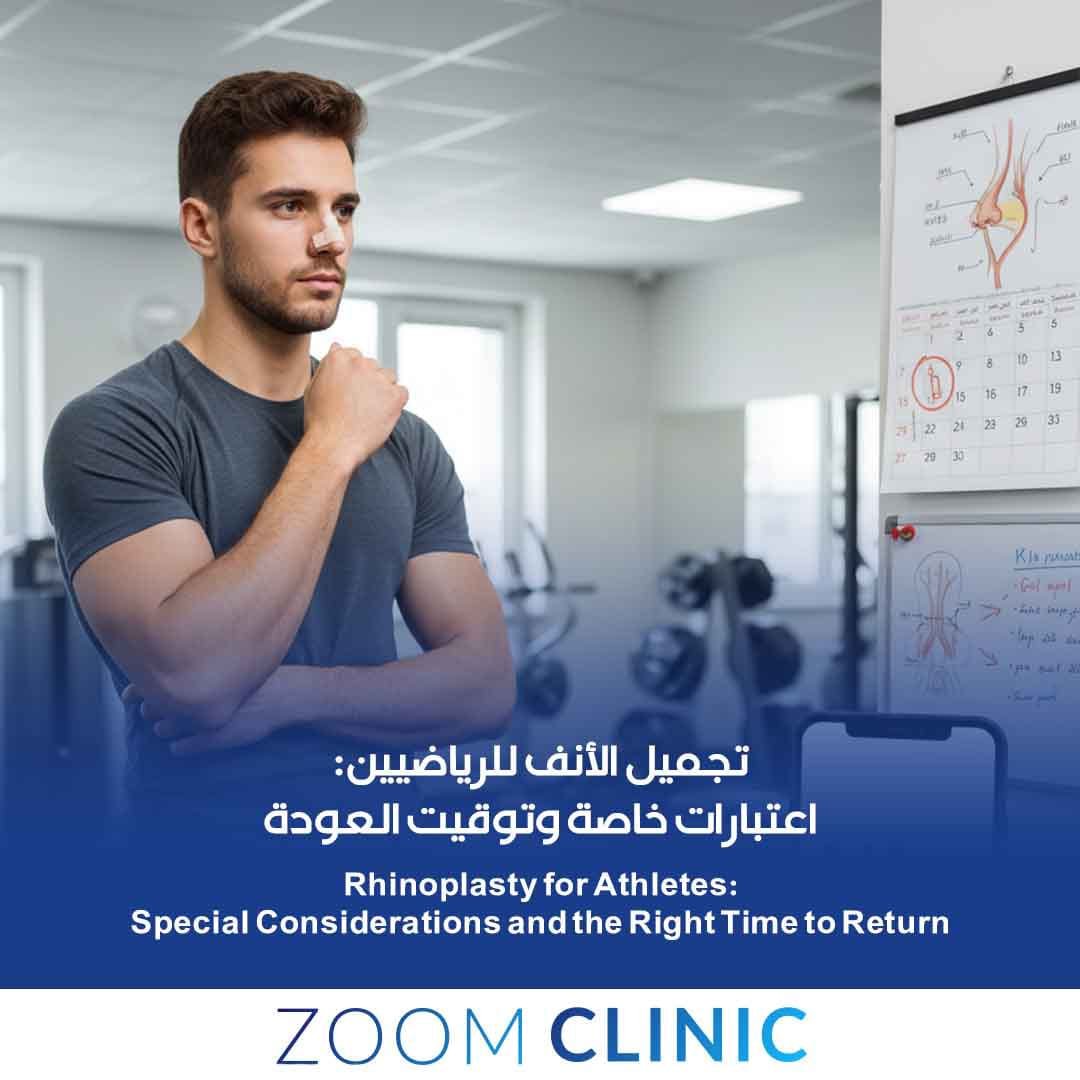
Athletes face unique challenges when considering rhinoplasty, whether for medical or cosmetic reasons. While many seek to improve their appearance or treat breathing problems that hinder their performance, the most important question remains: how can they achieve the balance between obtaining ideal results and safely returning to athletic activity? Rhinoplasty for athletes requires careful planning and a deep understanding of the special considerations that distinguish this group from others.
Unlike regular patients, athletes need a specific timeline for gradual return to training, taking into account the type of sport they practice and the level of physical contact involved. It’s not just about cosmetic healing, but ensuring that athletic performance and respiratory capacity are not affected. In this comprehensive guide, we will review everything an athlete needs to know before and after the procedure, from choosing the ideal timing to the gradual program for safe return to the field.
content
Why Do Athletes Need Rhinoplasty?
Rhinoplasty for Athletes
Medical and Functional Reasons
Many athletes suffer from breathing problems that directly affect their performance on the field. Deviated septum, which may result from previous injuries or be congenital, obstructs sufficient airflow to the lungs. This oxygen deficiency translates to decreased endurance, faster fatigue, and athletic performance below the required level.
Nasal fractures resulting from contact sports such as football or boxing often leave permanent deformities that require surgical correction. These injuries not only affect appearance but may cause chronic breathing problems, recurrent sinus infections, and even sleep disorders that affect rest periods and muscle recovery.
Improving respiratory function through rhinoplasty can make a tangible difference in athletic performance. Increased oxygen flow means greater energy, better endurance, and faster recovery after intense exercises. Many athletes notice significant improvement in their times and energy levels after correcting nasal breathing problems.
Cosmetic and Psychological Reasons
Beyond functional aspects, external appearance plays an important role in an athlete’s self-confidence. An injured or deformed nose resulting from repeated injuries may affect self-image and confidence, especially in the era of social media and intensive media coverage of sporting events.
Improving the nose’s appearance contributes to raising morale and increasing self-confidence, which is a psychological factor not to be underestimated in athletic competitions. A confident athlete performs better, makes faster decisions, and faces pressures more effectively.
Removing traces of old injuries also gives the athlete a new opportunity to start with a clean slate, both physically and psychologically. Getting rid of the constant reminder of a painful injury helps focus on future goals instead of the past.
Special Considerations for Athletes Before Rhinoplasty
Ideal Timing for the Procedure
Choosing the right time for rhinoplasty is one of the most important decisions an athlete faces. Wrong timing could mean losing an entire season or negatively affecting performance in crucial competitions. The optimal choice is to undergo surgery outside the competition season, during the annual rest period that most professional athletes get.
For athletes in schools or universities, summer vacation represents an ideal opportunity. This provides sufficient time for complete recovery before the start of the new season, with the possibility of gradual return to light training at the end of the rest period.
It’s recommended to plan for the surgery six to twelve months before any championship or important sporting event. This long period is not an exaggeration, as complete recovery and return to peak performance require more time than many imagine. Rushing the return may lead to catastrophic results, whether at the level of surgical outcome or athletic performance.
Additional Medical Examinations for Athletes
Before undergoing surgery, athletes need a more comprehensive medical evaluation than regular patients. Complete respiratory function assessment includes airflow measurement, lung capacity tests, and analysis of how any nasal obstruction affects oxygen absorption during physical exertion.
Pre-surgery athletic performance tests help establish a baseline for later comparison. Measuring heart rate, maximum oxygen consumption, and endurance provides accurate data for evaluating improvement after surgery.
Heart and lung examination ensures there are no health problems that may worsen due to surgery or anesthesia. Athletes, despite their high fitness, may sometimes suffer from undiagnosed cardiac conditions that need to be discovered before any surgical intervention.
Comprehensive blood tests reveal any vitamin or mineral deficiencies that may affect recovery speed. Athletes who follow strict diets may suffer from deficiencies in essential elements for wound healing such as zinc and vitamin C.

Rhinoplasty for Athletes
Choosing a Specialized Surgeon
Not every plastic surgeon is equally qualified to handle the unique needs of athletes. Searching for a surgeon with extensive experience in nasal surgeries for athletes ensures a deeper understanding of the special challenges of this group. The ideal surgeon should recognize the importance of balancing cosmetic results with preserving respiratory function, and even improving it.
Experience in dealing with previous sports injury cases is necessary, because previously injured nasal tissues may be more complex to handle. An experienced surgeon knows how to navigate between internal scars and incorrectly healed bones.
Previous record with athletic cases provides additional assurance. Ask about the number of athletes the surgeon has treated, the type of sports they practice, and success rates of their full return to athletic activity. A confident surgeon will be happy to share this information.
At Zoom Clinic, we provide a team of specialized surgeons who understand the unique needs of athletes and develop customized treatment plans that take into account athletic schedules and individual goals for each patient.
Types of Rhinoplasty Suitable for Athletes
Functional Rhinoplasty
This type of surgery focuses primarily on improving breathing and solving functional problems in the nose. Correcting deviated septum is the most common procedure, where the septum is repositioned in the middle of the nose to ensure equal airflow from both sides.
Widening the airways by reducing the size of enlarged nasal turbinates helps increase the amount of inhaled air. This improvement translates directly to better athletic performance, especially in activities requiring intensive aerobic effort such as running, swimming, or football.
Repairing weak nasal valves prevents nasal wall collapse during deep inhalation. This problem is common among athletes who breathe forcefully during physical exertion, and solving it significantly improves respiratory comfort and efficiency.
Functional surgery is often partially or fully covered by insurance companies if the breathing problem is medically documented. This makes it a more economically attractive option for athletes seeking performance improvement without excessive costs.
Cosmetic Rhinoplasty
Cosmetic surgery focuses on improving the external shape of the nose, while fully preserving or improving respiratory function. Reducing nose size, adjusting the tip shape, or removing the bump on the nasal bridge are common procedures requested by athletes.
Reshaping the nose after fractures restores natural appearance and removes deformities that may have resulted from sports injuries. The goal is not only beauty but also restoring symmetry and balance in facial features.
A skilled surgeon combines cosmetic and functional goals in one treatment plan. For example, nose reduction can be done in a way that also improves airflow, and correcting deviation can improve the overall appearance of the nose.
Transparency with the surgeon about expectations is very important. Athletes should clarify their desire to maintain a natural and strong appearance that suits the nature of their sport, avoiding exaggeration that may look inappropriate.
Modern Surgical Techniques for Athletes
Closed surgery technique features no external scars and shorter recovery period, but may be limited in complex cases. Open surgery provides better vision and more precise control, especially in cases of previous injuries or major deformities.
Structure-preserving techniques aim to make the least possible radical changes, which reduces recovery time and maintains nasal strength. This is especially important for athletes who will expose their noses to potential injury again.
Using three-dimensional technology in surgical planning allows the athlete to see expected results before the procedure. This helps make an informed decision and ensures alignment of expectations between patient and surgeon.
At Zoom Clinic, we use the latest surgical techniques to ensure the best results with the shortest possible recovery time, helping athletes return quickly and safely to practicing their passion.

Rhinoplasty for Athletes
Initial Recovery Period for Athletes (Weeks 1-4)
First Week: Complete Rest
The first week after surgery is the most critical and requires complete and total rest. Any physical activity, even brisk walking, increases blood flow to the face which may cause bleeding or additional swelling. Athletes accustomed to constant movement may find this period psychologically difficult, but it’s necessary for proper healing.
Sleeping in an elevated position using two or three pillows reduces swelling and facilitates breathing. Avoiding sleeping on the sides or stomach is essential to prevent pressure on the nose. Many patients find that sleeping in a comfortable chair in the first days is easier than the bed.
Pain and swelling management is done through medications prescribed by the doctor and cold compresses around the eye area. Avoid placing ice directly on the nose or splint. Swelling and bruising around the eyes are completely normal and will begin to gradually subside.
Avoid bending down, sneezing forcefully, or blowing your nose absolutely. These movements increase pressure inside the nose and may cause bleeding or damage healing tissues. If sneezing is unavoidable, open your mouth and sneeze with the least possible force.
Weeks 2-4: Gradual Recovery
After splint removal at the end of the first or second week, the nose begins to gradually take its new shape. External swelling decreases noticeably, but internal swelling continues for weeks and months. Patience is essential here, as the final result won’t be clear before several months.
Light walking becomes permitted and encouraged at this stage. Walking for 15-20 minutes daily improves blood circulation and helps recovery without increasing pressure on the nose. Avoid brisk walking or in very hot weather to prevent excessive sweating and redness.
Weightlifting, repeated bending, or any activity that increases blood pressure in the head remains completely prohibited. Even daily activities such as lifting heavy shopping bags or moving furniture should be avoided. Ask for help from others during this period.
Regular medical follow-up is necessary to monitor healing progress and detect any complications early. The surgeon will remove any internal sutures, check tissue healing, and may give special instructions for massage or pressure on certain areas to improve the final result.
Timeline for Return to Athletic Activity by Sport Type
Light and Non-Contact Sports
Yoga and Pilates can be started three to four weeks after surgery, completely avoiding inverted positions for at least two months. Head-down position increases blood flow to the face and may cause bleeding or swelling. Focus on gentle exercises that keep the head at heart level or higher.
Brisk walking and light jogging are permitted after four to six weeks, provided there’s no pain or pressure in the nose. Start with slow jogging for short distances and monitor your body’s response. Any feeling of strong pulsation in the nose or severe redness means you rushed a bit.
Swimming requires longer waiting, from six to eight weeks, to ensure complete healing of internal tissues. Chlorine in pools may irritate sensitive mucous membranes, and water itself may enter the nose and cause discomfort. Start with gentle swimming and avoid diving or jumping in water for three months.
Outdoor or indoor cycling can be resumed after four to six weeks. Avoid rough trails or high speeds initially to prevent any potential impacts. Wearing a good helmet with face guard provides additional protection in the first months.
Medium Intensity Sports
Intensive running and long jogging should wait until at least the sixth to eighth week. The repeated impact on feet during running reaches the head and may disturb the nose in early recovery stages. Start with short interval training and gradually increase distance.
Tennis and similar racket sports require waiting eight to ten weeks. Quick movements, sudden bending to catch balls, and risk of collision with the ball or racket are all risk factors. Start with light exercises against the wall before returning to matches.
Basketball in individual training (shooting, dribbling) can begin after eight to ten weeks, but full matches with contact need longer waiting. The risk of wayward elbows and stray balls is very large in early stages.
Light to medium weightlifting becomes safe after six to eight weeks, starting with very light weights and gradual increase. Avoid exercises requiring breath-holding or increased pressure in the head such as Valsalva maneuvers. Correct breathing during lifting is essential.
Contact and Violent Sports
Football in all its forms requires waiting at least three to four months before full return to matches. Risk of collision with the ball, other players’ heads, or falling on the ground are all real threats to the recovering nose. Individual training can begin earlier, but with extreme caution.
Boxing and martial arts are the most dangerous and need a complete four to six months recovery period. Direct strikes to the face may completely destroy surgical results and require another surgical intervention. Even bag training should be done with extreme caution using full face guards.
Rugby and full contact sports require four to five months before safe return. Extreme physical force and constant contact in these sports means the nose must have completely healed and regained its full structural strength.
Basketball in official matches needs three to four months. Using a custom-made sports nose guard provides additional protection and allows slightly earlier return with better safety. Many professional athletes use these guards permanently after nasal surgeries.
Gradual Return to Athletic Training Program
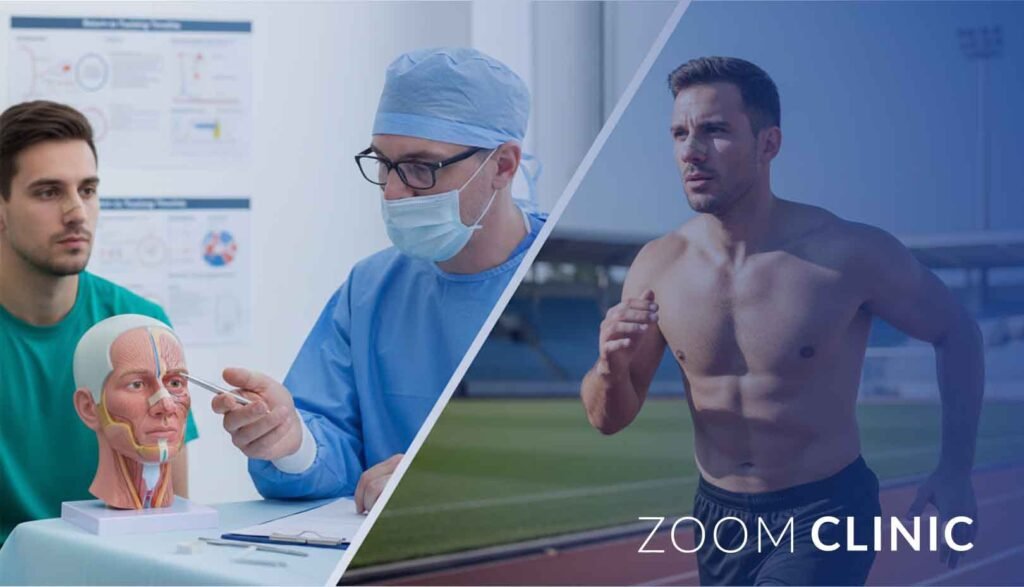
Rhinoplasty for Athletes
First Phase: Very Light Activity (Weeks 4-6)
Deep breathing exercises form the cornerstone at this stage. Breathing through the nose slowly and deeply helps strengthen respiratory muscles and improves airflow in the new nasal passages. Practice diaphragmatic breathing exercises for ten minutes three times daily.
Daily walking at a moderate pace for twenty to thirty minutes maintains basic fitness without strain. Choose moderate temperature times and avoid walking in hot noon or freezing cold. Moderate air is better for the recovering nose.
Light stretching exercises for the whole body prevent muscle stiffness and maintain flexibility. Focus on slow and smooth movements without any sudden jumps or twists. Gentle yoga (without inverted positions) is ideal at this stage.
Monitoring warning signs is very important. Any bleeding, sudden swelling, sharp pain, or breathing difficulty requires immediate stopping and contacting the doctor. Your body tells you when to slow down, so listen to it.
Second Phase: Moderate Activity (Weeks 6-8)
Gradually increasing exercise intensity begins at this stage. You can raise walking speed to brisk walking, or add gentle hills to your route. The goal is to raise heart rate slightly without severe strain.
Light cardio exercises such as stationary bike or rowing machine with low resistance help build endurance. Start with short fifteen-minute sessions and gradually increase to thirty minutes. Monitor your breathing and make sure you can speak comfortably during exercise.
Avoid any physical contact completely at this stage. No group training, no ball sports, and no activity with collision possibility. Individual exercises in a safe environment are the only option.
Follow-up with the doctor at the end of this phase is necessary to get approval to move to the next phase. The doctor will examine the nose internally and externally to ensure proper healing and no hidden problems.
Third Phase: Near-Complete Training (Weeks 8-12)
Return to group training becomes possible, but with strict conditions. Participate in exercises that don’t involve physical contact. In football for example, you can participate in tactical drills and running, but not practice matches.
Non-contact exercises include running, passing, goal shooting, and individual dribbling. These activities gradually return you to the game’s rhythm without risking nose injury. Be careful of stray balls and protect yourself with your hands when needed.
Using protective equipment becomes mandatory from this phase onward. Custom-made sports nose guard, face helmets in appropriate sports, and any other equipment recommended by your doctor. Don’t underestimate the importance of this protection.
Performance evaluation at this stage helps know your progress. Compare your speed, endurance, and energy level with measurements taken before the procedure. Many athletes notice tangible improvement in breathing and performance by this stage.
Fourth Phase: Complete Return (After 3-6 Months)
Participation in official matches requires explicit surgeon approval. A final comprehensive examination ensures the nose has completely healed and regained its full structural strength. Don’t rush this step even if you feel ready.
Commitment to protective equipment should continue for at least six to twelve months after the procedure, even in official matches. The nose guard may seem annoying at first, but you’ll get used to it quickly and it will give you great peace of mind.
Continuous monitoring of any changes in the nose is necessary. Any new swelling, persistent pain, or breathing difficulty should be reported immediately. New injuries, even minor ones, need quick medical evaluation.
Communication with medical and athletic team ensures everyone is aware of your condition. Tell your coach, teammates, and sports medical staff about your surgery so they’re more careful and provide necessary support when needed.
Sports Nutrition Tips to Speed Recovery
Proteins for Tissue Repair
Protein is the essential component for rebuilding damaged tissues during surgery. Athletes need higher amounts than the average person, approximately 1.6 to 2 grams per kilogram of body weight daily during recovery period.
Animal protein such as chicken, turkey, fish, eggs, and low-fat dairy products provides all essential amino acids. Fatty fish like salmon also contains anti-inflammatory omega-3.
Plant protein from legumes, nuts, seeds, and quinoa complements the diet and provides additional fiber and nutrients. Combining diverse protein sources ensures getting all necessary amino acids.
Protein supplements such as whey protein powder can be useful if it’s difficult to get sufficient amount from food. Consuming protein shake after light workouts helps muscle and tissue recovery together.
Essential Vitamins and Minerals
Vitamin C plays a crucial role in producing collagen necessary for wound healing. Citrus fruits, bell peppers, strawberries, and broccoli are excellent sources. Taking 500-1000 mg daily from supplements is safe and speeds healing.
Zinc is necessary for immune function and tissue repair. Red meat, oysters, legumes, and nuts are rich in zinc. Zinc deficiency is common among athletes following vegetarian diets, so you may need a supplement.
Omega-3 from fish oil or flaxseed naturally reduces inflammation and improves healing speed. Taking 2-3 grams daily is safe and effective. Avoid very high doses before surgery as they may increase blood thinning.
Iron is important for athletes, especially women, to avoid anemia that slows recovery. Red meat, spinach, and fortified cereals are good sources. Checking iron levels before and after surgery ensures no deficiency.
Hydration and Its Importance
Recommended water amount increases during recovery period. Drink at least 3-4 liters daily, more if you’re training or in hot weather. Good hydration improves blood flow to tissues and speeds removal of toxins and dead cells.
Avoid harmful drinks such as alcohol which slows wound healing and increases swelling. Caffeine in large quantities may cause dehydration, so limit coffee and energy drinks. Soft drinks contain excess sugar and no nutritional value.
Importance of electrolytes emerges when returning to training. Sodium, potassium, and magnesium are lost with sweat and need replacement. Natural electrolyte drinks or coconut water are better than commercial sports drinks full of sugar and artificial colors.
Dehydration signs include dark urine, dizziness, headache, and dry mouth. If you notice any of these, increase water amount immediately. Continuous hydration throughout the day is better than drinking large amounts at once.
Risks and Complications Specific to Athletes
Risks of Early Return to Sports
Bleeding is one of the most serious complications of early return. Fine blood vessels in the nose need time for complete healing. Any trauma or sudden increase in blood pressure may cause internal or external bleeding that may require urgent medical intervention.
Healed tissue damage occurs when fragile tissues are exposed to stress before regaining strength. This may lead to internal scars, adhesions, or permanent deformities in nasal structure requiring later corrective surgery.
Final result deformity is a nightmare for anyone who underwent cosmetic surgery. Direct impact on the recovering nose may change the shape the surgeon worked precisely to achieve. Re-surgery is possible, but more complex and costly and results not guaranteed.
Re-fractures in the nose that recently underwent surgery may be worse than original fractures. Newly healed bones are weaker than normal bones for several months. Patience for complete recovery prevents this tragedy.
How to Protect the Nose During Sports
Types of sports nose guards are multiple and suit different sports. Custom-made clear plastic guard provides excellent protection with clear vision. Full face helmets are ideal for violent sports such as hockey or boxing.
When should the guard be used? In any sport with even slight collision or fall possibility, the guard is necessary for at least the first six months after surgery. In contact sports, the doctor may recommend using it for a full year.
How to choose the appropriate guard depends on your sport type and required protection degree. Custom-made guards are more expensive but more comfortable and protective than ready-made types. Consult your surgeon for specific recommendation.
Correct use tips include ensuring good guard fit before each use, cleaning it regularly to prevent bacteria accumulation, and not sharing it with anyone else. Examine the guard regularly to ensure no cracks or damage that may reduce its effectiveness.
Warning Signs Requiring Doctor Visit
Persistent bleeding even if light requires immediate doctor contact. Nosebleed lasting more than ten minutes despite gentle pressure and sitting upright needs medical evaluation. Don’t put your head back as this may cause blood swallowing.
Sudden or increasing swelling, especially if accompanied by redness or heat, may indicate infection. Infection is rare after nasal surgeries but possible, and needs quick antibiotic treatment to prevent serious complications.
Breathing difficulty that increases instead of improving with time may indicate internal problems such as adhesions or scars blocking airways. Early intervention can solve these problems before becoming permanent.
Severe pain that doesn’t respond to prescribed painkillers is abnormal and needs evaluation. Some pain and discomfort are normal, but sharp and persistent pain may indicate a problem needing medical attention.
Sudden or noticeable nose shape change, especially if it occurred after trauma or accident, needs immediate examination. Quick intervention may save surgical result and prevent need for corrective operation.
Impact of Rhinoplasty on Athletic Performance
Improving Respiratory Capacity
Increased oxygen flow is the most obvious benefit after functional rhinoplasty. Correcting deviation and widening airways allows greater air amount with each breath, meaning more oxygen for working muscles.
Improved endurance comes as a natural result of better breathing. Athletes who felt suffocated during long races or intensive training notice a big difference in their ability to continue for longer periods with high performance.
Raising performance level appears in tangible numbers. Long-distance runners record better times, distance swimmers feel more comfortable, and football players maintain their energy until match end. The difference may not be dramatic, but it’s enough to noticeably improve athletic performance.
Faster recovery after exercises is an additional unexpected benefit. Good breathing during sleep improves rest quality, meaning better muscle recovery and higher readiness for next training.
Positive Psychological Impact
Increased self-confidence reflects on performance on the field. An athlete confident in appearance and ability to breathe efficiently handles pressures better and makes bolder decisions.
Improved focus occurs when the mind isn’t preoccupied with breathing problems or appearance concerns. Ability to fully focus on athletic performance without internal distractions makes a clear difference in performance quality.
Enhanced athletic performance comes from the sum of physical and psychological factors. A healthy body and confident psyche equal an athlete at peak capabilities, ready to compete and excel beyond previous levels.
Getting rid of social anxiety related to appearance allows the athlete to interact better with team, coaches, and audience. Social openness improves team dynamics and creates a more positive environment for everyone.
Athletes’ Testimonials
Many professional athletes underwent rhinoplasty for functional or cosmetic reasons, and witnessed tangible improvement in their athletic life. These success stories encourage others to take the step when necessary.
Positive experiences include athletes who noticed immediate breathing improvement after splint removal, runners who recorded new personal records after complete recovery, and contact sports players who returned stronger and more confident than before.
Improved results are not only at athletic performance level but at general life level. Better sleep, higher energy during the day, and general feeling of comfort and satisfaction contribute to better quality of life inside and outside the field.
The most important lesson from these stories is the importance of patience and commitment to recovery instructions. Athletes who rushed return faced complications, while those who were patient and followed the gradual program achieved the best possible results.
Expert Tips at Zoom Clinic for Athletes
Pre-Procedure Planning
Choosing ideal timing requires a comprehensive look at the athletic schedule for the coming year. Review championship dates, training camps, and critical periods in your season. Choose a period that gives you at least three to six months before any important event.
Coordination with coach is necessary to get his support and understanding. A good coach will help you develop a modified training plan that takes into account recovery period and ensures your strong return. Transparency with him prevents any misunderstanding or unrealistic expectations.
Preparing recovery plan before surgery saves you great pressure later. Determine who will help you at home, how you’ll handle daily obligations, and how you’ll maintain basic fitness level during mandatory rest period.
Psychological preparation is as important as physical preparation. Accept that the first weeks will be difficult and you’ll feel frustrated from inability to train. This is natural and temporary, and the final result is worth the wait.
Communication with Medical and Athletic Team
Importance of transparency cannot be overstated. Tell your surgeon about your sport’s nature in detail, training intensity level, and expected physical contact extent. This information helps him customize surgery and recovery plan for your needs.
Regular follow-up with doctor at scheduled appointments ensures early discovery of any problems. Don’t skip any appointment even if you feel everything is fine. Professional examination may discover things you don’t see.
Adjusting plan according to progress is natural and expected. If recovery is slower than expected, don’t try to compensate time by speeding return. The opposite is also true, if recovery is very fast, the doctor may allow you to progress slightly faster in return program.
Open communication line with sports medical team at your club or university ensures everyone works together for your benefit. Share surgeon’s reports with them and ask them to modify training plans based on medical recommendations.
Commitment to Post-Procedure Instructions
Self-discipline is the real key to successful recovery. As an athlete, you’re accustomed to discipline in training and diet. Apply the same discipline to recovery period. Follow medical instructions precisely, take medications on time, and adhere to restrictions imposed on physical activity.
Not rushing return to sports is the hardest part for active athletes. Desire to return to the field is strong, but rushing may cost you much more than waiting. A few extra weeks of rest are better than months of complications or need for corrective surgery.
Patience for results is essential, as final result of rhinoplasty doesn’t appear before a full year in most cases. Mild internal swelling continues for months, and final shape develops gradually. Be patient and trust the process.
At Zoom Clinic, we provide a comprehensive post-procedure follow-up program including regular examinations, customized guidance for gradual return to sports, and continuous support until complete recovery. Our team understands the unique challenges facing athletes and works with you to ensure the best possible result.
Frequently Asked Questions
When can I return to sports after rhinoplasty?
Timing depends on sport type: light sports after 4-6 weeks, medium after 8-10 weeks, and contact after 3-6 months. You should consult the surgeon to get a customized timeline according to your case and type of surgery you had and your specific sport nature.
Does rhinoplasty affect my athletic performance?
The procedure often improves athletic performance by improving breathing and increasing oxygen flow. Functional surgery corrects breathing problems, enhancing endurance. What’s important is following complete recovery period to achieve best results without complications that may hinder performance.
What’s the best time of year for athletes to have the procedure?
Best time is outside competition season, during annual rest period or summer vacation. It’s recommended to plan 6-12 months before any important championship. This gives you sufficient time for complete recovery and gradual return without competitive pressures or strict deadlines.
Do I need to use a nose guard when returning to sports?
Yes, we strongly recommend using sports nose guard when returning to contact sports for at least 6-12 months. The guard protects the nose from direct impacts and prevents damage to surgical results. Consult your doctor to choose the appropriate type for your specific sport and fit it correctly.
How do I know I’m ready for complete return to training?
Signs include: significant swelling disappearance, no pain, normal respiratory capacity, and explicit surgeon approval. Don’t rely on your feeling alone; medical follow-up is necessary. Early return may lead to serious complications affecting final result and your entire athletic career.
Conclusion
Rhinoplasty for athletes is a decision requiring careful planning, strict commitment to recovery instructions, and patience for gradual return to athletic activity. Balancing the desire to improve appearance or respiratory function with maintaining athletic performance isn’t easy, but it’s completely possible with correct medical guidance.
Choosing appropriate timing, working with a specialized surgeon who understands athletes’ needs, and following gradual return program with discipline are the three keys to success. Athletes who commit to these principles not only return to their previous level but often exceed it thanks to improvement in respiratory capacity and self-confidence.
Remember that the weeks or months you spend in recovery are an investment in your athletic future, not wasted time. Safe and complete return is much more important than quick return. Your health and surgical result safety should always be the top priority.
At Zoom Clinic, we’re committed to helping athletes achieve their cosmetic and functional goals without sacrificing their athletic passion. Our team of specialized surgeons combines high medical expertise with deep understanding of athletes’ unique needs. We’re here to accompany you every step, from initial consultation to triumphant return to the field.
If you’re an athlete considering rhinoplasty, don’t hesitate to contact us for a personalized customized consultation. We’ll evaluate your case, discuss your goals, and develop an integrated treatment plan ensuring the best results with the shortest possible recovery period. Invest in yourself today to achieve your full potential tomorrow.
read also Rhinoplasty for Seniors: Are You a Suitable Candidate? Your Comprehensive Guide 2026
Get the special offer today from Zoom Clinic